
Most brands approach AI search with a visibility question:
How do we get AI systems to mention us?
That question matters, but it begins too late in the process.
Before an AI system can confidently mention, compare, or recommend a company, it needs enough information to support the answer it is generating. It may need to verify what the company does, who it serves, which capabilities it offers, how it differs from competitors, and whether independent sources support those claims.
That information rarely comes from one page.
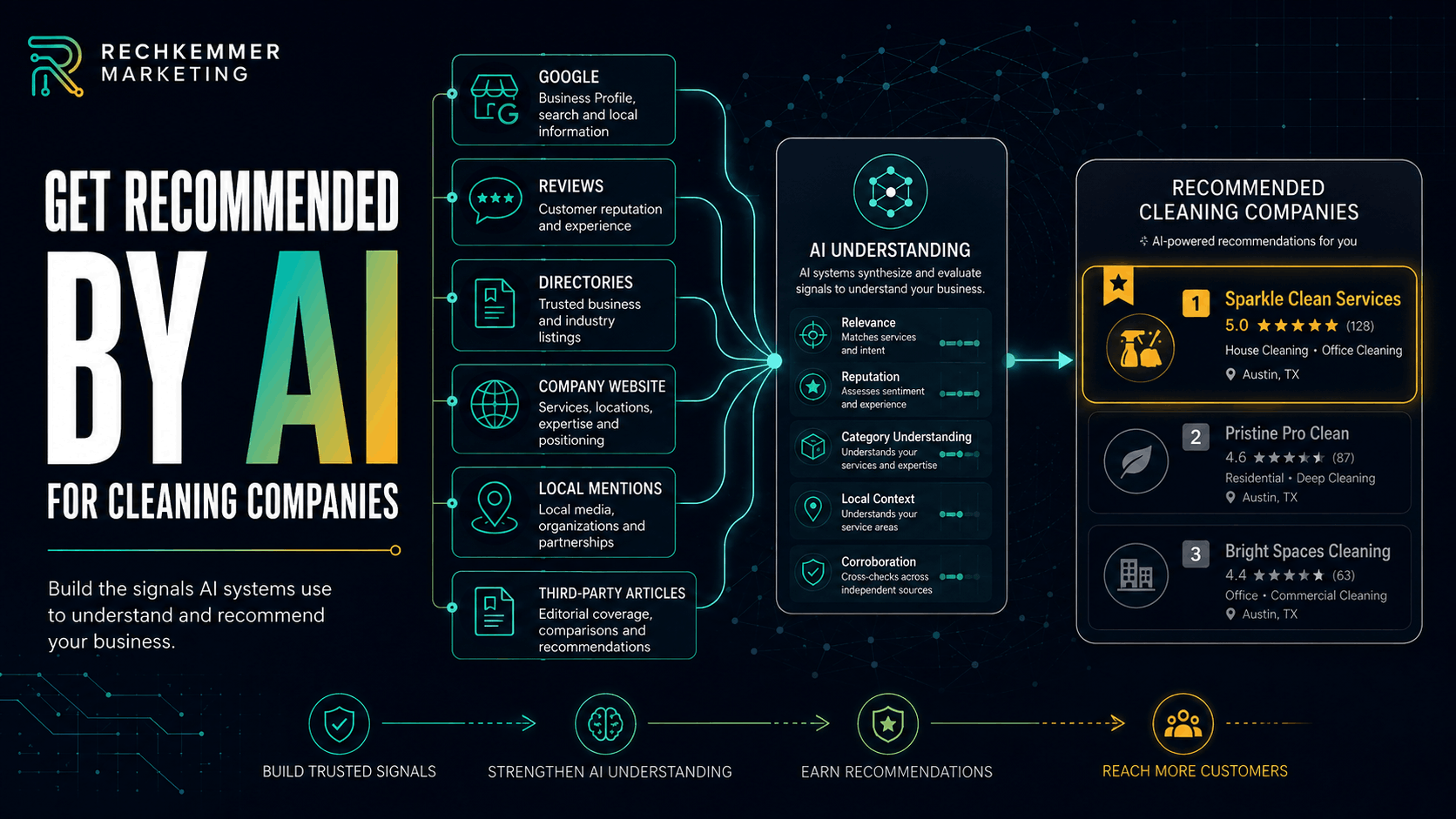
An AI-generated recommendation may draw from a combination of:
- Product and service pages
- Pricing information
- Technical documentation
- Case studies
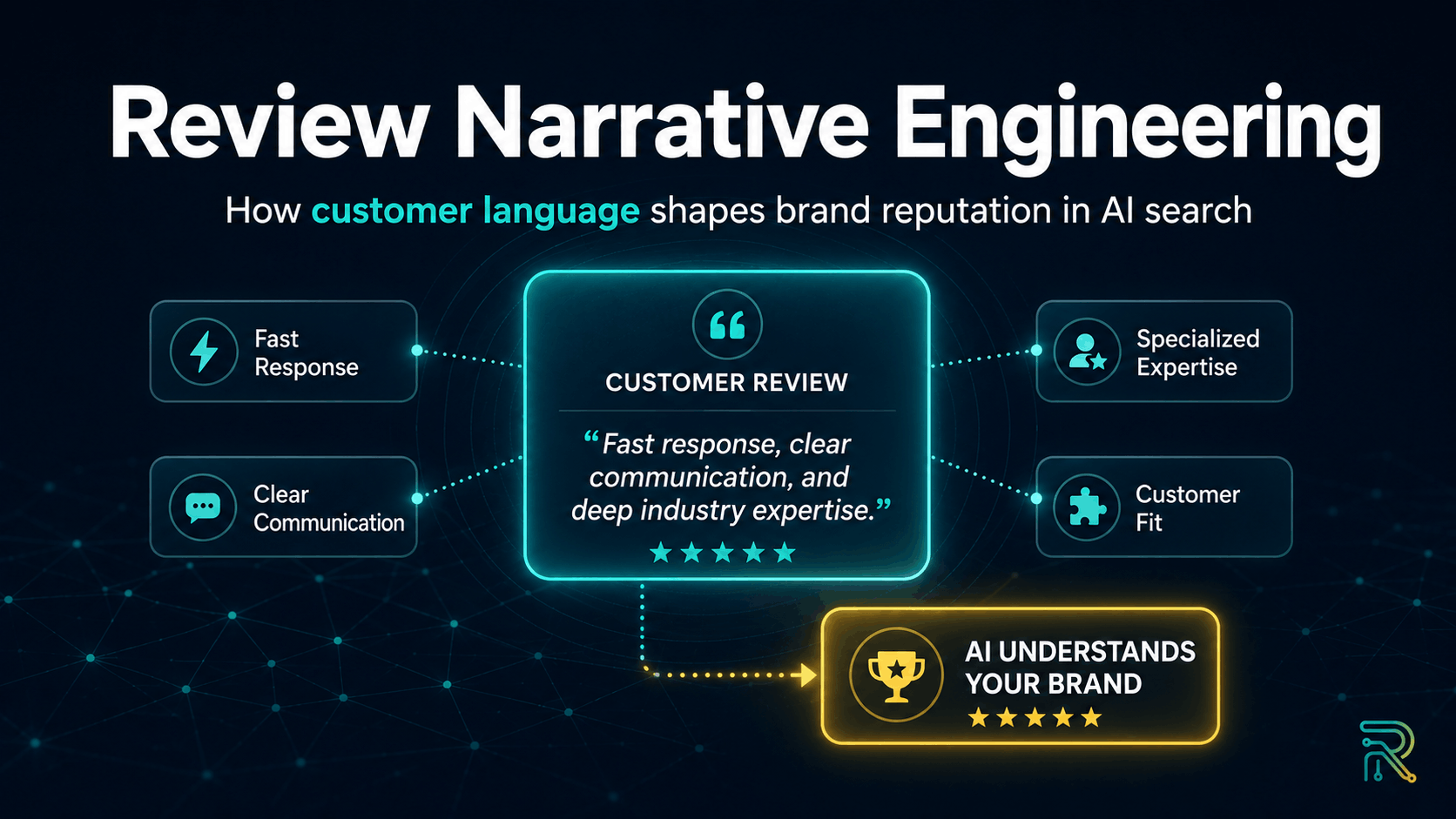
- Review platforms
- Industry publications
- Directories
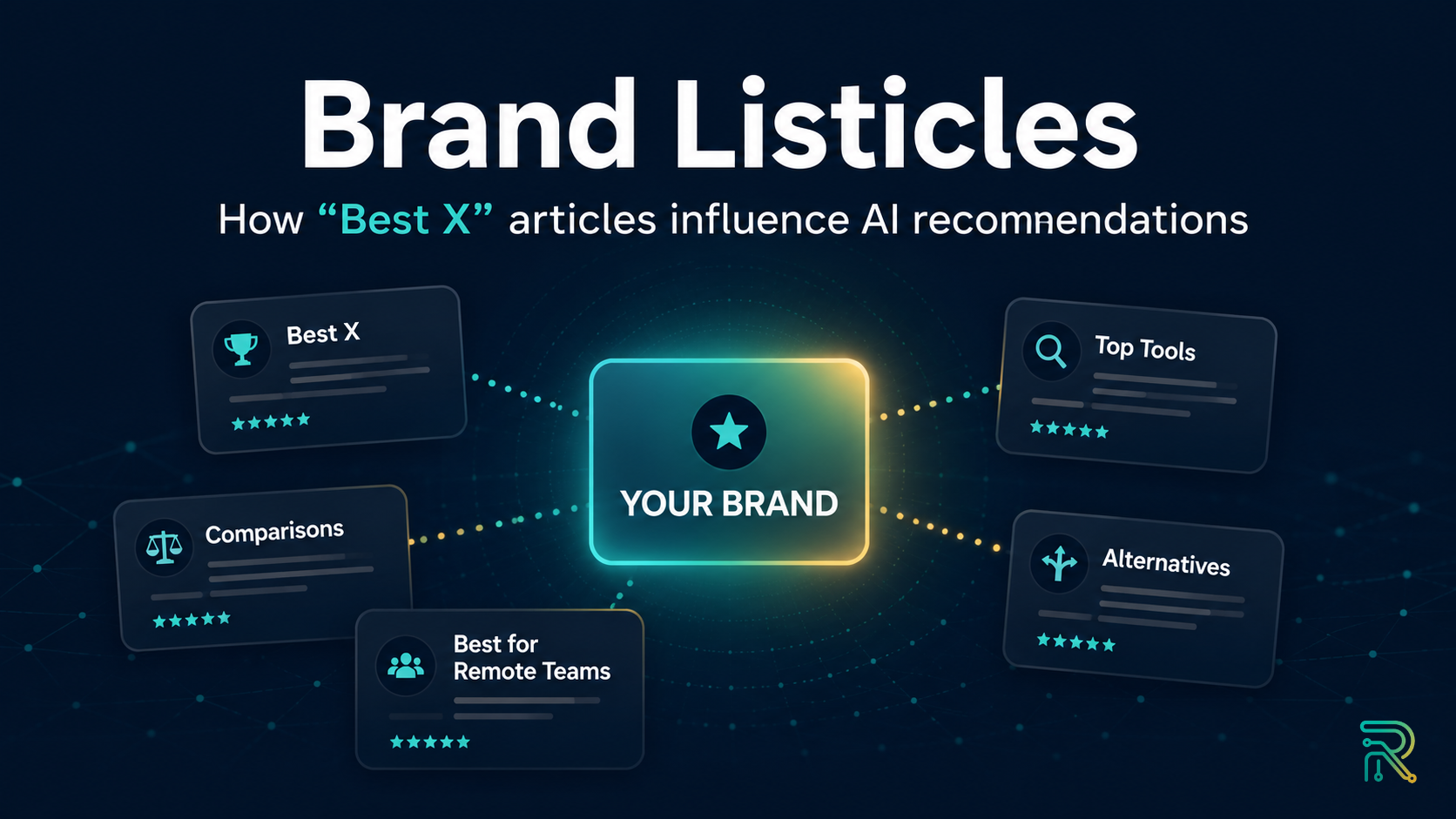
- Comparison articles
- Community discussions
- Structured business profiles
The more strategic question is therefore:
What evidence does an AI system need before it can confidently recommend our brand—and where should that evidence exist?
Prompt-to-source mapping is the process of connecting commercially important buyer questions to the evidence and sources required to support the resulting AI answer.
Traditional SEO maps keywords to pages.
Prompt-to-source mapping connects prompts to answer requirements, answer requirements to evidence, and evidence to supporting sources.
What Is Prompt-to-Source Mapping?
Prompt-to-source mapping is a strategic process for identifying:
- The prompts buyers may ask
- The information an AI system needs to answer them
- The claims that must be supported
- The sources currently providing that support
- The missing sources needed to strengthen the brand’s visibility
The basic model is:
Prompt → Answer Requirements → Evidence Requirements → Supporting Sources
Suppose a software company wants to appear for this prompt:
What is the best CRM for a small manufacturing company?
The visible prompt contains several implied questions:
- Is the platform actually designed for manufacturers?
- Does it work for small companies?
- Which ERP systems does it integrate with?
- How difficult is implementation?
- How much does it cost?
- What do manufacturing customers say about it?
- How does it compare with larger CRM platforms?
- What are its limitations?
Each question creates an evidence requirement.
That evidence may need to exist across several source types.
| Answer requirement | Evidence needed | Potential sources |
|---|---|---|
| Manufacturing specialization | Clear industry positioning and relevant customer proof | Industry page, case study, trade publication |
| Small-business fit | Company-size guidance and customer examples | Audience page, reviews, marketplace profile |
| ERP compatibility | Documented integrations | Integration pages, technical documentation |
| Affordable implementation | Pricing and deployment context | Pricing page, buyer guide, reviews |
| Easier than enterprise alternatives | Comparative evidence | Alternative page, comparison article, community discussion |
Prompt-to-source mapping turns a broad visibility objective into a practical evidence roadmap.
The goal is not to force AI systems to repeat a preferred marketing message. It is to make accurate, useful, and verifiable information available across the sources that may shape the answer.
Why Keyword Mapping Alone Is Not Enough for AI Search
Traditional keyword mapping usually asks:
- What terms do people search?
- How much search volume do those terms have?
- Which page should target each keyword?
- What content already ranks?
- Where are the organic search gaps?
That remains an important part of SEO.
But keyword mapping usually connects one visible search with one primary destination page.
AI-generated answers may require a broader evidence set.
Traditional keyword mapping asks:
Which page should rank for this search?
Prompt-to-source mapping asks:
What must an AI system verify before it can include the brand in this answer?
Consider the prompt:
What is the best accounting software for a small service business?
A company may rank for “small-business accounting software” while still lacking clear evidence about:
- Pricing
- Invoicing capabilities
- Payroll support
- Payment integrations
- Ease of setup
- Customer support
- Suitability for service businesses
- Mobile functionality
- Limitations
- Comparison with alternatives
The system may recognize the company as accounting software but remain uncertain about whether it is appropriate for the buyer’s situation.
The category page establishes eligibility.
It does not necessarily establish recommendation fit.
A more complete strategy therefore connects:
- Keywords to pages
- Prompts to evidence
- Evidence to sources
- Sources to recommendation conditions
Keyword mapping helps a brand become discoverable.
Prompt-to-source mapping helps establish why the brand belongs in the final answer.
How AI Systems Evaluate Commercial Prompts
Commercial prompts often appear simple because the buyer asks for the final decision rather than listing every criterion behind it.
Consider:
Who is the best agency for enterprise SEO?
A useful answer requires more than finding companies that use the phrase “enterprise SEO.”
The system may need to evaluate several dimensions.
Category Fit
The first question is whether the company actually provides enterprise SEO.
Relevant evidence may include:
- Enterprise SEO service pages
- Technical SEO documentation
- Agency directories
- Industry profiles
- Third-party articles
- Client descriptions
A company that discusses SEO broadly but never establishes an enterprise offering may fail at the first stage.
Customer Fit
The system also needs to determine whether the agency serves the type of organization described in the prompt.
Useful evidence may clarify:
- Typical client size
- Industries served
- Geographic coverage
- Internal team requirements
- Engagement model
- Organizational complexity
- Budget expectations
An agency may offer enterprise SEO but specialize primarily in ecommerce brands, publishers, or local franchises.
Customer fit narrows category eligibility into situational relevance.
Capability
The system may need evidence that the agency can handle enterprise complexity.
Relevant capabilities might include:
- Large-site technical audits
- JavaScript SEO
- Site migrations
- International SEO
- Governance
- Content operations
- Analytics
- Cross-functional implementation
- Multi-domain strategies
- Stakeholder reporting
Generic statements such as “full-service SEO” provide little evidence of these specific capabilities.
Trust and Reputation
A recommendation also requires confidence that the provider can deliver.
Trust evidence may include:
- Client case studies
- Customer testimonials
- Independent reviews
- Industry publications
- Certifications
- Conference participation
- Expert commentary
- Partner relationships
- Public customer references
First-party evidence can document results. Third-party sources can provide corroboration.
Differentiation
The system may need to explain why one agency should be selected instead of another.
Potential differentiators include:
- Industry specialization
- Technical depth
- Engagement structure
- Team access
- Implementation support
- Reporting quality
- Pricing
- Strategic focus
- International capabilities
Differentiation should describe meaningful buyer conditions, not generic claims of superiority.
Commercial Fit
The best provider must also be financially and operationally realistic for the buyer.
Relevant evidence may include:
- Minimum engagement
- Pricing model
- Contract length
- Typical project scope
- Retainer requirements
- Setup fees
- Internal resource expectations
A provider may be highly qualified but inappropriate because its minimum engagement exceeds the buyer’s budget or capacity.
Limitations
Accurate recommendations also require exclusion criteria.
Examples may include:
- Does not offer implementation
- Focuses only on certain industries
- Requires a large internal content team
- Does not support international campaigns
- Is not designed for smaller companies
- Has a high minimum contract value
Limitations help define when a company should—and should not—be recommended.
The more of these dimensions a system needs to evaluate, the less likely one optimized page is to provide everything required.
The Four-Layer Prompt-to-Source Mapping Framework
A prompt-to-source map can be built using four layers.
1. Define the Target Prompt
Start with a commercially meaningful buyer question.
Good target prompts are connected to:
- Provider selection
- Product discovery
- Alternatives
- Comparisons
- Industry specialization
- Use cases
- Pricing
- Trust
- Geographic availability
- Important capabilities
Examples include:
- Best CRM for small manufacturing companies
- Best SEO agency for B2B SaaS
- Alternatives to HubSpot for a consulting firm
- Is Company X reliable?
- Which payroll software is best for restaurants?
- Who provides cybersecurity services for healthcare companies?
- Which accounting firm specializes in technology startups?
Do not begin by mapping every possible prompt variation.
Prioritize questions that influence consideration, sales conversations, or revenue.
2. Identify the Answer Requirements
Next, determine what an AI system would need to know to produce a useful answer.
For:
Best CRM for small manufacturing companies
The answer requirements might include:
- Manufacturing relevance
- Small-business suitability
- Core CRM capabilities
- ERP integrations
- Pricing
- Implementation difficulty
- Support
- Customer reviews
- Competitor differences
- Product limitations
These requirements should reflect how the buyer makes the decision.
Internal sources can help identify them:
- Sales-call notes
- Product demos
- Customer interviews
- Lost-deal analysis
- Support questions
- Review feedback
- Community discussions
- Competitor comparisons
The answer requirements become the evaluation criteria behind the prompt.
3. Define the Evidence Requirements
Translate each answer requirement into a claim that needs support.
Examples include:
- The platform is designed for manufacturers.
- It supports small and midsized companies.
- It integrates with common ERP systems.
- It can be implemented without a large technical team.
- Its pricing is appropriate for smaller organizations.
- Manufacturing customers have used it successfully.
- It is less complex than enterprise CRM platforms.
- It does not support certain advanced enterprise requirements.
The evidence requirement should be specific enough to verify.
Compare these two statements:
The platform is flexible.
The platform supports small manufacturers that need sales pipeline management connected to existing ERP workflows.
The second statement establishes clearer relationships between:
- Brand
- Audience
- Industry
- Capability
- Use case
Specific relationships are more useful than vague positive language.
4. Map the Supporting Sources
Finally, identify where each claim should be supported.
Possible first-party sources include:
- Homepage
- Product pages
- Service pages
- Industry pages
- Audience pages
- Pricing pages
- Case studies
- Documentation
- Integration pages
- Comparison pages
- FAQs
Possible third-party sources include:
- Customer reviews
- Industry publications
- Directories
- Software marketplaces
- Comparison articles
- Expert commentary
- Association profiles
- Partner listings
- Community discussions
- Research reports
The source should match the claim.
For example:
- Product capabilities belong in documentation.
- Current pricing should be explained by the company.
- Customer experience is more credible when supported by reviews.
- Industry expertise can be strengthened by case studies and trade publications.
- Competitive fit may require both owned comparisons and independent analysis.
The objective is not to repeat every claim across every source.
It is to create the right evidence in the right places.
How Different Prompt Types Require Different Sources
Different prompts create different evidence needs.
A trust question should not rely on the same source portfolio as a feature question.
Recommendation Prompts
Examples include:
- Best X for Y
- Who should I hire?
- Top providers
- Which platform should I choose?
- What is the best option for my company?
These prompts typically require evidence across:
- Category
- Customer fit
- Capabilities
- Pricing
- Reputation
- Differentiation
- Limitations
Useful sources may include:
- Buyer guides
- Comparison articles
- Reviews
- Expert content
- Case studies
- Industry lists
- Directories
- Community discussions
Recommendation prompts often require the widest source portfolio because the system must identify, filter, compare, and justify its selections.
Alternative and Competitor Prompts
Examples include:
- Company X alternatives
- Products like Company X
- Competitors to Company X
- Better options than Company X
These prompts require comparative evidence.
Useful sources may include:
- Alternative pages
- Competitor-comparison pages
- Review platforms
- Buyer guides
- Software marketplaces
- Third-party comparison articles
- Community discussions
The evidence should explain:
- Why someone might switch
- Who each product serves
- Relative strengths
- Relative weaknesses
- Pricing differences
- Feature gaps
- Implementation tradeoffs
- Poor-fit conditions
Similarity alone is not enough. The system needs information about which alternative is best under specific conditions.
Trust and Reputation Prompts
Examples include:
- Is Company X legitimate?
- Can I trust Company X?
- Is Company X reliable?
- What do customers say about Company X?
These prompts depend heavily on external validation.
Useful sources may include:
- Review platforms
- Testimonials
- Case studies
- Industry publications
- Certifications
- Association profiles
- Customer discussions
- Expert mentions
- Business databases
The company’s website can establish facts, but independent sources are usually more persuasive for reputation questions.
Feature and Capability Prompts
Examples include:
- Does Product X integrate with Salesforce?
- Does Company X offer technical SEO?
- Can Product X support multiple locations?
- Does the platform include payroll?
- Can the provider serve international clients?
Useful sources include:
- Product pages
- Service pages
- Integration directories
- Documentation
- Knowledge bases
- Support articles
- API documentation
- Marketplace profiles
- Implementation guides
These questions should be answered directly.
A feature may technically exist but remain difficult to verify when the information is buried in a long page, hidden inside a sales document, or described vaguely.
Local and Availability Prompts
Examples include:
- Who provides this service near me?
- Does Company X serve Chicago?
- Which providers operate in Iowa?
- Can this company work with international customers?
Useful sources may include:
- Location pages
- Service-area pages
- Business profiles
- Local directories
- Association listings
- Review platforms
- Shipping pages
- Regional case studies
Geographic availability should be explicit.
A national service area should not be left for the system to infer from scattered customer examples.
Pricing and Commercial-Fit Prompts
Examples include:
- How much does Company X cost?
- Is Company X affordable for a small business?
- What does an engagement include?
- Does the platform require a long contract?
- Is there a setup fee?
Useful sources include:
- Pricing pages
- Service packages
- Proposal explainers
- Comparison content
- Review platforms
- FAQs
- Marketplace profiles
- Buyer guides
Brands do not always need to publish exact prices.
They can still explain:
- Pricing model
- Typical range
- Minimum engagement
- Factors affecting cost
- Included services
- Additional fees
- Who the offer is designed for
Complete silence creates uncertainty that may affect recommendation fit.
How to Identify Prompt-to-Source Gaps
A prompt-to-source gap exists when an important answer requirement lacks sufficient support.
Consider the prompt:
What is the best cybersecurity company for healthcare organizations?
The company currently has:
- A cybersecurity service page
- A healthcare industry page
- One healthcare case study
That provides a reasonable first-party foundation.
But the map may reveal several gaps:
- No healthcare publication mentions
- No reviews discussing healthcare experience
- No comparison content
- No expert commentary
- No association profile
- No clear compliance documentation
- No third-party validation of industry specialization
- No customer discussions
- No transparent limitations
The problem is not necessarily content quantity.
The problem is incomplete evidence coverage.
A traditional content response might be to publish more general cybersecurity articles.
A prompt-to-source strategy asks:
Which missing evidence would make this recommendation easier to support?
The answer may include:
- Expand the healthcare service page
- Publish a compliance-focused case study
- Create documentation for relevant security frameworks
- Improve profiles in healthcare technology directories
- Earn commentary in an industry publication
- Collect reviews mentioning healthcare expertise
- Develop comparison content for healthcare buyers
- Participate in relevant professional communities
- Publish original research about healthcare security risks
Prompt-to-source mapping helps distinguish between several types of gaps:
Missing First-Party Evidence
The company does not clearly document the claim on its own website.
Missing Third-Party Corroboration
The company makes the claim, but independent sources do not reinforce it.
Weak Source Diversity
The claim depends on one page or platform.
Inconsistent Facts
Sources disagree about the company’s category, services, audience, pricing, or capabilities.
Missing Comparison Context
The brand is documented but not positioned against alternatives.
Unsupported Recommendation Criteria
Important buyer conditions such as budget, implementation, location, or limitations remain unclear.
The appropriate solution depends on the type of gap.
How to Build a Source Portfolio for Each Prompt
Important commercial prompts should rarely depend on one page.
A stronger prompt footprint includes several evidence layers.
First-Party Sources
First-party sources establish the company’s factual foundation.
These may include:
- Service pages
- Product pages
- Industry pages
- Use-case pages
- Pricing pages
- Case studies
- Documentation
- Integration pages
- Comparison pages
- FAQs
First-party sources are usually the best place to establish:
- Current capabilities
- Pricing structure
- Service scope
- Locations
- Technical details
- Ideal customer
- Implementation process
- Policies
- Limitations
Because the brand controls these sources, they should be accurate, direct, and regularly maintained.
Third-Party Sources
Third-party sources provide outside context and corroboration.
These may include:
- Reviews
- Industry publications
- Relevant directories
- Expert commentary
- Comparison pages
- Forum discussions
- Association profiles
- Partner listings
- Marketplace profiles
Third-party sources may be especially useful for supporting:
- Reputation
- Customer experience
- Market positioning
- Comparative fit
- Industry credibility
- Common use cases
- Recommendation conditions
The wording does not need to match the company website exactly.
The underlying facts and relationships should be compatible.
Structured Sources
Structured sources organize information into consistent fields or formats.
Examples include:
- Business profiles
- Software marketplaces
- Industry databases
- Product directories
- Professional profiles
- Partner ecosystems
- Association listings
- Connected knowledge sources
These sources may reinforce:
- Company name
- Category
- Location
- Leadership
- Services
- Product type
- Integrations
- Certifications
- Industry classification
A strong source portfolio does not mean appearing everywhere.
It means having enough accurate support across the sources most relevant to the target prompt.
Why Multiple Sources Should Support the Same Conclusion
Prompt-to-source mapping encourages evidence redundancy without requiring duplicate content.
Suppose the desired conclusion is:
This CRM is a strong option for small manufacturing companies.
That conclusion might be supported by:
- A manufacturing CRM page
- A small-business pricing page
- A manufacturing case study
- ERP integration documentation
- Reviews from manufacturing customers
- A comparison article
- A software marketplace profile
- An industry publication
Each source contributes a different part of the argument.
Together, they create multiple retrieval paths supporting the same conclusion.
This is more resilient than relying on one optimized page.
One system may retrieve the case study. Another may surface the marketplace profile. Another may cite the comparison article. A fourth may rely on reviews.
The specific sources can change while the underlying brand narrative remains stable:
- The product serves manufacturers.
- It works for smaller companies.
- It integrates with relevant systems.
- It is easier to implement than enterprise alternatives.
- Customers in that audience use it successfully.
The goal is not identical language.
The goal is compatible evidence.
How Prompt-to-Source Mapping Improves AI Citation Strategy
AI citation development is often approached too broadly.
A company may decide it needs:
- More mentions
- More reviews
- More listings
- More press coverage
- More community visibility
- More comparison pages
These may all be useful, but without a prompt map they lack prioritization.
Prompt-to-source mapping gives citation work a specific purpose.
Instead of asking:
How do we get more mentions?
The company asks:
Which sources are missing from the evidence portfolio for this prompt?
The process becomes:
- Identify the prompt
- Define the answer requirements
- Audit the evidence currently available
- Identify unsupported claims
- Build or earn the required sources
This may reveal that the company does not need another broad publication mention.
It may need:
- A comparison article connecting it with a specific competitor
- Reviews mentioning a priority use case
- A directory profile with better category information
- A case study proving small-business fit
- Documentation supporting a critical feature
- An industry source reinforcing specialization
The best citation opportunity depends on the missing relationship.
How to Use Competitor Analysis to Find Missing Evidence
Traditional competitor analysis often compares:
- Rankings
- Keywords
- Traffic
- Backlinks
- Content volume
- Domain authority
Prompt-to-source competitor analysis asks different questions:
- Which prompts do competitors appear for?
- Which sources support their inclusion?
- What claims do those sources reinforce?
- Which source types appear repeatedly?
- What reasons are given for recommending them?
- Which audiences and use cases are connected to them?
- What evidence exists for competitors but not for us?
This analysis can reveal several forms of competitive advantage.
Citation Gaps
Competitors appear in publications, comparisons, directories, reviews, or communities where the brand is absent.
Entity Gaps
Competitors are clearly associated with important categories, audiences, services, locations, or use cases.
The brand is not.
Content Gaps
Competitors have useful assets answering buyer questions about:
- Pricing
- Implementation
- Integrations
- Alternatives
- Customer fit
- Limitations
Reputation Gaps
Competitors have stronger:
- Reviews
- Customer references
- Community discussions
- Expert validation
- Industry coverage
Positioning Gaps
Competitors are consistently described in ways that clarify:
- Who they serve
- What they are best at
- How they differ
- When they should be selected
- When another option may be better
The objective is not to copy every competitor placement.
It is to understand why competitors are easier to retrieve, evaluate, and recommend.
A 10-Step Prompt-to-Source Mapping Process
1. Identify High-Value Commercial Prompts
Begin with questions connected to buyer consideration.
Prioritize:
- Best-provider prompts
- Product recommendations
- Service recommendations
- Alternatives
- Comparisons
- Industry specialization
- Audience fit
- Pricing
- Trust
- Implementation
- Important capabilities
Use sales calls, keyword research, customer interviews, support questions, community discussions, and competitor research to develop the prompt set.
2. Test the Prompts Across AI Systems
Record:
- Which brands appear
- Which sources are cited
- What reasons are provided
- Which competitors appear repeatedly
- How answers change with prompt wording
- Which attributes appear to influence the recommendation
Do not treat one response as definitive.
Answers can vary by platform, context, timing, and wording.
3. Record the Sources Behind Each Answer
Document:
- Cited pages
- Publications
- Directories
- Reviews
- Community threads
- Brand websites
- Comparison articles
- Data sources
Also record what each source contributes.
One source may establish pricing. Another may provide reputation context. Another may explain differentiation.
4. Identify the Answer Requirements
Break the prompt into the criteria needed for a useful answer.
These may include:
- Category
- Audience
- Industry
- Company size
- Features
- Services
- Pricing
- Location
- Reputation
- Integrations
- Implementation
- Alternatives
- Limitations
5. Translate Requirements Into Supported Claims
Convert each criterion into a specific statement that requires evidence.
Examples include:
- Serves small manufacturers
- Integrates with common ERP systems
- Offers implementation support
- Has pricing appropriate for smaller teams
- Has relevant customer results
- Is simpler than an enterprise alternative
6. Audit Existing Brand Sources
Determine whether each claim is supported by:
- A first-party source
- A third-party source
- Both
- Neither
Evaluate each source for:
- Accuracy
- Specificity
- Recency
- Accessibility
- Credibility
- Clarity
- Consistency
7. Identify the Missing Evidence
Classify each gap.
Does the brand need:
- A new service page?
- Better documentation?
- A case study?
- More reviews?
- A directory update?
- Comparison content?
- Industry coverage?
- Community participation?
- Expert commentary?
- Original research?
- A factual correction?
8. Build or Earn the Required Sources
Create the asset or pursue the source appropriate to the gap.
Every asset should support:
- A defined prompt
- A clear answer requirement
- A specific claim
- A known evidence gap
Avoid publishing content simply because a keyword exists.
9. Reinforce Consistent Positioning
Ensure important sources agree on the underlying facts:
- What the brand does
- Who it serves
- Which problems it solves
- Which industries it understands
- What makes it different
- When it is a good fit
- What its limitations are
Exact wording is unnecessary.
Factual and strategic consistency matter.
10. Retest and Refine
Repeat the prompts after meaningful evidence changes.
Track:
- Whether the brand appears
- Which sources are retrieved
- Whether the description is accurate
- Which competitors remain stronger
- Which criteria remain unsupported
- Whether new source gaps have appeared
The map should evolve as the company, market, product, competitors, and retrieval environment change.
How to Measure Prompt-to-Source Coverage
Measurement should evaluate the evidence system—not merely the final mention.
Prompt Coverage
Track:
- Number of commercially important prompts mapped
- Percentage with complete answer requirements
- Percentage with adequate supporting evidence
- Number of unsupported recommendation criteria
- Coverage across different audiences and use cases
A prompt is not fully mapped merely because it appears in a spreadsheet.
Its requirements, evidence, sources, and gaps should all be documented.
Source Coverage
Measure:
- First-party evidence coverage
- Third-party evidence coverage
- Structured-source coverage
- Source diversity
- Number of gaps resolved
- Accuracy of existing sources
- Dependence on individual pages or platforms
A large number of weak sources should not be treated as stronger than a smaller number of relevant, specific sources.
AI Visibility
Track distinctions between:
- Mentioned
- Included in a comparison
- Recommended
- Cited
- Positioned prominently
- Described accurately
These are different outcomes.
A brand may be mentioned but not recommended. It may be recommended but not cited. It may be included for the wrong audience.
Narrative Accuracy
Evaluate whether AI-generated answers and external sources correctly describe the brand’s:
- Category
- Audience
- Industry
- Use cases
- Capabilities
- Differentiators
- Locations
- Limitations
- Recommendation conditions
Visibility built around inaccurate positioning is not a successful outcome.
Common Prompt-to-Source Mapping Mistakes
Creating Content Without a Defined Prompt
A new article may be useful, but its strategic role should be clear.
Before creating it, ask:
- Which prompt does this support?
- Which answer requirement does it address?
- What evidence does it add?
- Which gap does it close?
Targeting Only Broad Category Questions
Broad prompts matter, but specific prompts reveal the real decision criteria.
A brand may appear for “best CRM” and disappear for:
- Best CRM for consulting firms
- Best affordable CRM
- Best CRM with ERP integration
- Best CRM for a five-person team
Map prompts across audiences, budgets, industries, features, and competitive situations.
Relying Too Heavily on First-Party Sources
The company website is essential, but it cannot independently validate every reputation or recommendation claim.
Identify where outside corroboration would make the conclusion more credible.
Building Mentions Without Supporting a Specific Claim
A mention provides limited strategic value when it does not explain:
- What the brand does
- Who it serves
- Which use case it supports
- Why it differs
- When it should be considered
Context matters more than mention volume alone.
Measuring Rankings and Mentions Instead of Evidence Coverage
Rankings show where a page appears in traditional search.
Mentions show that the brand appeared in an answer.
Neither explains whether the system has adequate support for the broader recommendation.
Measure the evidence beneath the outcome.
Ignoring Buyer Fit and Recommendation Conditions
A source may confirm that the company offers a service without explaining who should choose it.
Commercial answers require fit, not just eligibility.
Expecting Every Source to Use Identical Language
Independent sources will describe the brand differently.
The objective is not word-for-word repetition.
The objective is consistency across the core facts and relationships.
Frequently Asked Questions About Prompt-to-Source Mapping
What is prompt-to-source mapping?
Prompt-to-source mapping is the process of connecting a target buyer prompt with the answer requirements, evidence, and sources needed to support an AI-generated response.
It helps brands understand what information must exist before an AI system can confidently include, compare, cite, or recommend them.
How is prompt-to-source mapping different from keyword mapping?
Keyword mapping connects search terms to website pages.
Prompt-to-source mapping connects buyer questions to the evidence and source network needed to support the answer.
Keyword mapping focuses primarily on discoverability. Prompt-to-source mapping focuses on recommendation support.
What types of prompts should a brand map first?
Start with commercially important prompts involving:
- Best providers
- Product or service recommendations
- Competitor alternatives
- Comparisons
- Audience fit
- Industry specialization
- Pricing
- Trust
- Important capabilities
- Geographic availability
Prioritize prompts that closely reflect real sales conversations and buying decisions.
How many sources should support each prompt?
There is no fixed number.
The necessary source portfolio depends on the complexity of the prompt and the claims required.
A simple capability question may be supported by product documentation and a marketplace profile. A broad recommendation prompt may require owned content, reviews, comparisons, case studies, publications, and structured profiles.
What is the difference between an answer requirement and an evidence requirement?
An answer requirement is something the system needs to know to answer the prompt.
An evidence requirement is the specific claim or fact needed to support that part of the answer.
For example:
- Answer requirement: small-business fit
- Evidence requirement: the product is designed for teams with fewer than 50 employees and offers pricing appropriate for that segment
Do all supporting sources need to be third-party?
No.
First-party sources are often the best sources for current pricing, capabilities, service scope, integrations, implementation, and limitations.
Third-party sources are particularly useful for reputation, customer experience, comparative positioning, and outside corroboration.
The strongest source portfolio usually includes both.
How does prompt-to-source mapping support AI citations?
It identifies which evidence is missing from the source environment surrounding an important prompt.
That allows a brand to develop citation sources strategically rather than pursuing mentions without a clear purpose.
The goal shifts from “earn more citations” to “build the specific sources required to support this answer.”
How should prompt-to-source coverage be measured?
Useful metrics include:
- Number of target prompts mapped
- Percentage with sufficient evidence
- Number of unresolved evidence gaps
- First-party and third-party source coverage
- Source diversity
- Recommendation frequency
- Competitive inclusion
- Citation appearances
- Accuracy of brand descriptions
Performance should be reviewed across multiple prompts and time periods.
Does prompt-to-source mapping guarantee AI recommendations?
No.
AI systems use different models, indexes, retrieval methods, and source-selection processes. Their answers may also change over time.
Prompt-to-source mapping improves the quality and availability of supporting evidence, but it cannot guarantee a mention, citation, ranking, or recommendation.
Stop Creating Content. Start Building Evidence Systems.
AI search requires a shift in content planning.
The objective is no longer simply to publish more pages or collect more mentions.
It is to create a connected network of evidence supporting the questions buyers actually ask.
That network may include:
- Service pages
- Product documentation
- Industry content
- Use-case pages
- Case studies
- Pricing information
- Comparison resources
- Reviews
- Directories
- Publications
- Community discussions
- Structured profiles
Each source has a role.
Each source should support a specific conclusion.
The brands that become easiest to recommend will not necessarily be the brands with the most content.
They will be the brands with the clearest, most credible, and most complete evidence systems.
Traditional SEO maps keywords to pages.
AI search strategy maps prompts to evidence—and evidence to the sources capable of supporting the answer.