
Reviews are no longer only conversion assets for human buyers.
They are also part of the public information environment AI systems may use when answering questions such as:
- Which provider has the strongest reputation?
- What are the pros and cons of this company?
- Which option is best for a specific type of customer?
- Who is known for fast service?
- Which platform is easiest to implement?
- What do customers consistently say about this brand?
A company website can explain what the business offers. It can describe its positioning, services, features, audience, and differentiators.
Reviews provide a different kind of evidence.
They show how customers describe the experience in their own words.
That makes reviews more than ratings. Collectively, they can create a distributed reputation narrative around the brand.
A business with hundreds of vague reviews may communicate less useful information than a business with fewer reviews that consistently describe its expertise, services, customer fit, responsiveness, outcomes, and limitations.
The opportunity is not to manufacture favorable language or tell customers what to say.
It is to create better customer experiences and feedback systems that encourage people to describe the details that genuinely mattered.
This is the foundation of review narrative engineering: intentionally developing a review ecosystem that communicates accurate, recurring, and useful information about the brand.
What Is Review Narrative Engineering?
Review narrative engineering is the strategic process of improving the themes, language, and brand associations that naturally emerge across customer reviews.
The objective is not to manipulate testimonials, create fake reviews, or pressure customers into making specific claims.
Instead, the strategy involves:
- Understanding what buyers care about
- Examining what customers already say
- Identifying recurring positive and negative themes
- Improving the experiences that influence those themes
- Asking better feedback questions
- Making it easier for customers to describe their experience in detail
- Monitoring how the broader reputation narrative changes over time
A generic review request may produce:
Great service. Highly recommend.
That is positive, but it communicates very little.
A more descriptive review might say:
Their team responded within an hour, diagnosed the problem quickly, explained the repair clearly, and had our delivery truck back on the road the same afternoon.
The second review contains several useful associations:
- Fast response
- Technical expertise
- Clear communication
- Fleet repair
- Operational urgency
- Same-day resolution
Those details help future buyers understand why the customer valued the company.
They also contribute more information to the public sources that may be retrieved when a system attempts to describe the brand.
Review narrative engineering is therefore not simply about collecting more praise.
It is about increasing the amount of specific, authentic information available about the customer experience.
Why Review Content Matters for AI Search
Company websites and customer reviews answer different questions.
A website may claim:
We provide exceptional customer service.
A customer review may explain:
They answered the phone after hours, gave me a realistic arrival time, and kept me updated while the technician was on the way.
The website provides the intended positioning.
The review provides an example of what that positioning looked like in practice.
Reviews can contain information such as:
- Firsthand experiences
- Specific services purchased
- Customer problems
- Reasons the company was chosen
- Implementation details
- Results
- Geographic references
- Customer type
- Communication quality
- Product strengths
- Recurring weaknesses
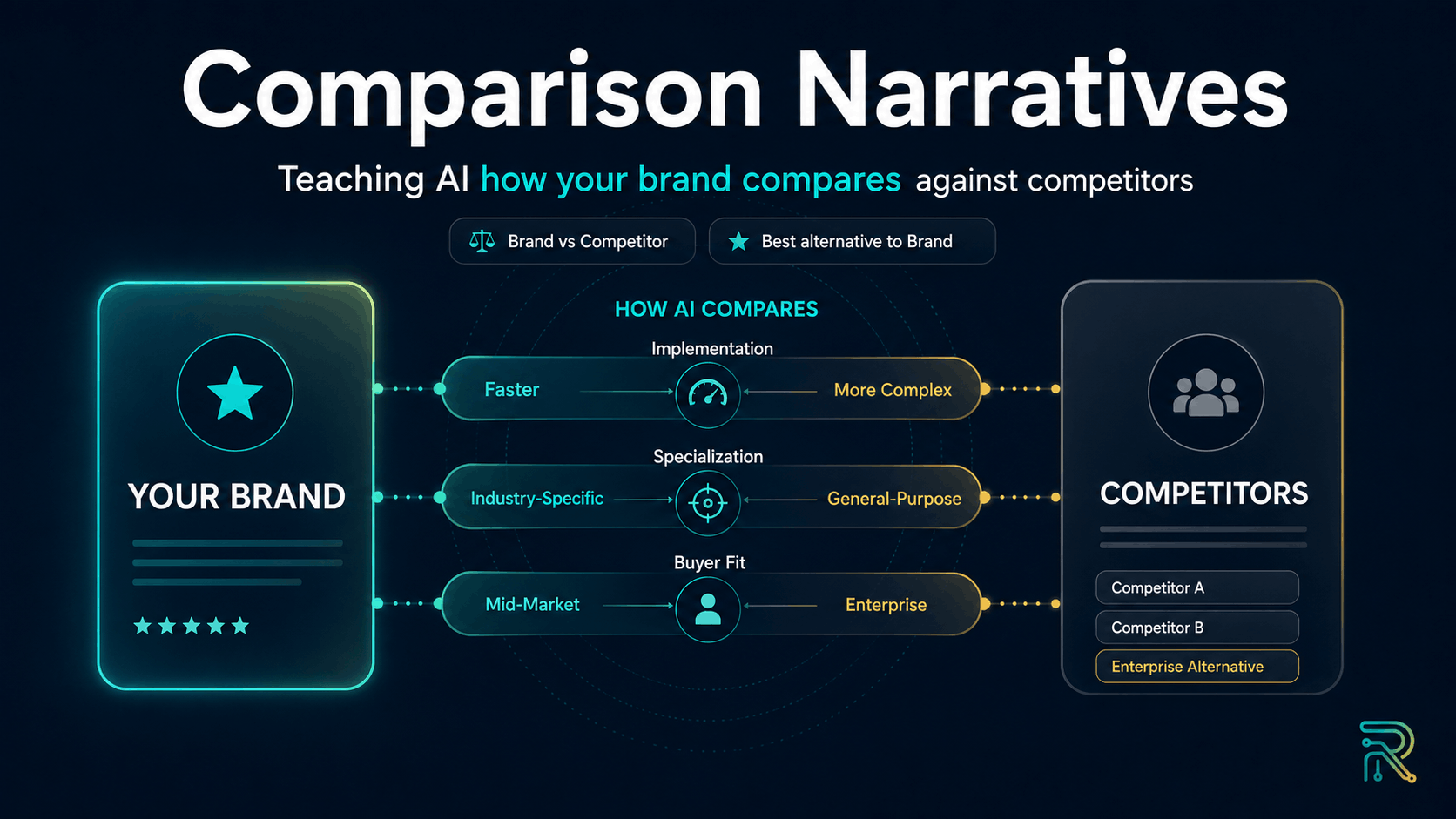
- Comparisons with alternatives
This makes review content useful for questions involving reputation, fit, tradeoffs, and customer experience.
Consider a buyer asking:
Which payroll software is easiest for a small business to set up?
A product page may explain the onboarding process. But customer reviews may reveal whether small-business owners actually found the setup simple, whether support was responsive, and where users encountered difficulties.
Neither source should be treated as perfect evidence on its own.
First-party content may naturally emphasize strengths. Reviews can be subjective, incomplete, or influenced by unusual experiences.
Together, however, they create a more complete picture.
Review Volume and Review Narrative Are Not the Same
Many businesses measure review performance through two numbers:
- Average rating
- Total review count
Both matter.
A strong average rating can build trust. A large review count can indicate that the company has served many customers and maintained an active reputation profile.
But those metrics do not reveal what the reviews actually teach people about the brand.
Consider two hypothetical businesses.
Business A
- 500 reviews
- High average rating
- Most comments say “great company,” “good service,” or “highly recommend”
Business B
- 150 reviews
- Similar average rating
- Customers frequently mention:
- Fast emergency response
- Experience with commercial properties
- Clear estimates
- On-time arrival
- Professional communication
- Clean work areas
- Reliable follow-up
Business A has greater volume.
Business B may have a more informative reputation footprint.
Its reviews communicate specific patterns that help a buyer understand how the business operates and why it is chosen.
The strategic question is therefore not only:
How many reviews do we have?
It is also:
What does the market learn about us from those reviews?
A brand may have an excellent rating while still having a weak review narrative.
This happens when customers are satisfied but the review collection process produces little descriptive information.
The Reputation Signals Reviews Can Reinforce
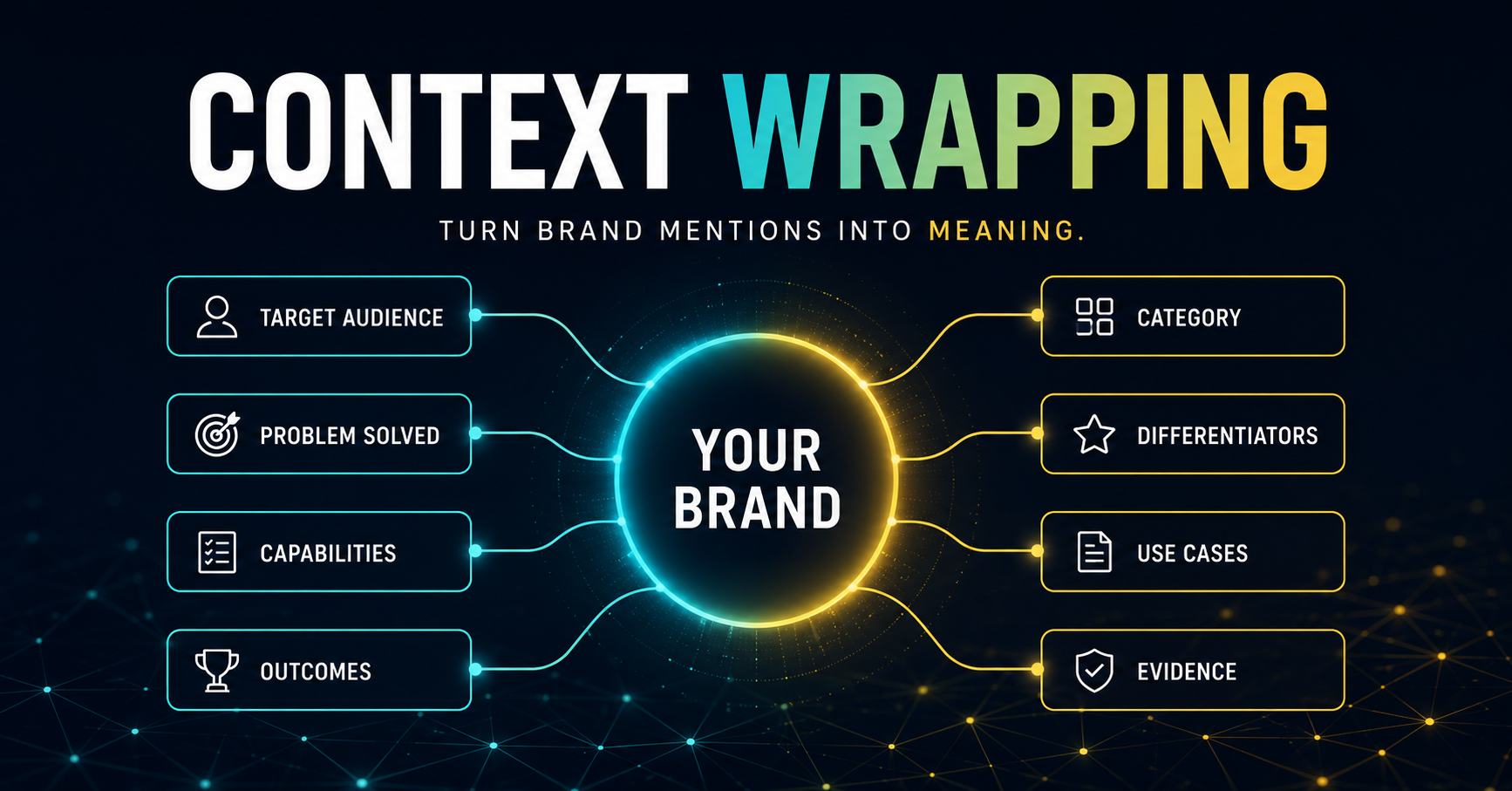
Reviews can connect a brand with several kinds of information.
These relationships may become increasingly useful when they appear repeatedly across different customers and platforms.
Service Associations
Service associations help clarify what the company actually provides.
Examples include:
- HVAC installation
- Emergency plumbing
- Fleet maintenance
- Tax preparation
- ERP implementation
- Commercial cleaning
- Technical SEO
- Post-construction cleanup
A local contractor may list ten services on its website, but its reviews may mention only one of them.
That can create a difference between the services the company offers and the services the market most clearly associates with it.
Review analysis can reveal:
- Which services customers mention most often
- Which priority services are rarely mentioned
- Which services produce the strongest satisfaction
- Which services generate recurring complaints
- Whether customers use the same terminology as the company
This information can improve both review strategy and positioning.
Customer-Type Associations
Reviews can help clarify who uses the company.
Examples include:
- Homeowners
- Property managers
- Manufacturers
- Small businesses
- Enterprise teams
- Healthcare organizations
- SaaS companies
- Independent contractors
This matters because many commercial recommendations are situational.
A buyer may not ask for the most popular provider overall. They may ask for the best provider for their industry, company size, location, or operating model.
A review that says:
They were great to work with.
provides general positive sentiment.
A review that says:
As a property manager overseeing 30 rental units, I needed a cleaning company that could handle recurring turnovers with little notice.
adds clear customer-fit context.
Problem Associations
Reviews often describe the situation that caused the customer to seek help.
Examples include:
- An emergency repair
- A failed software implementation
- A compliance deadline
- A time-sensitive move
- Poor lead quality
- An integration problem
- A damaged piece of equipment
- A recurring operational bottleneck
Problem associations show what the brand is trusted to solve.
This can be especially useful when customers describe both the challenge and the reason the company was selected.
For example:
We had already tried two agencies but still could not connect organic traffic to qualified pipeline. Their team rebuilt the measurement process and helped us identify which content was influencing real opportunities.
That review connects the company with a specific problem, method, and outcome.
Differentiator Associations
Reviews can reinforce why customers chose one company rather than another.
Common differentiators include:
- Faster response
- Specialized expertise
- Better communication
- More personalized support
- Easier implementation
- Clearer pricing
- Higher-quality work
- Greater reliability
- Better industry understanding
- Stronger follow-through
A differentiator becomes more credible when it appears repeatedly in independent customer language.
A website can claim that the company is responsive.
If dozens of customers independently describe fast replies, proactive updates, and reliable follow-up, responsiveness becomes a stronger part of the brand narrative.
Location Associations
Reviews can reinforce geographic relevance.
Customers may mention:
- Cities
- Neighborhoods
- Counties
- Service territories
- Regional markets
- Local facilities
- Nearby landmarks
This is particularly relevant for local businesses, but it can also apply to regional and national providers.
For example:
They helped us open our second location in Cedar Rapids.
That review connects the company to both a service experience and a geographic market.
Businesses should not pressure customers to insert locations unnaturally. But when geography is relevant to the experience, it can provide useful context.
Outcome Associations
Reviews may also describe what changed after the customer used the product or service.
Examples include:
- Reduced downtime
- Faster implementation
- More qualified leads
- Cleaner facilities
- Fewer scheduling issues
- Improved reporting
- Higher customer satisfaction
- Faster project completion
Outcome language is valuable, but it should be handled carefully.
A review represents one customer’s experience. It should not automatically be generalized into a universal performance claim.
The purpose is to document recurring outcomes honestly, not to turn individual testimonials into guaranteed promises.
Designing Review Collection Around Buyer Decision Factors
A stronger review strategy begins with understanding how customers make decisions.
Before changing the review request, identify the questions buyers ask before choosing a provider.
Then map those questions to the evidence and themes that would help answer them.
|
Buyer question |
Evidence needed |
Relevant review themes |
|
Who responds fastest in an emergency? |
Speed and availability |
Quick response, after-hours support, arrived promptly |
|
Who understands my industry? |
Relevant experience |
Industry knowledge, specialized expertise, understood our workflow |
|
Who communicates clearly? |
Communication quality |
Explained options, provided updates, answered questions |
|
Which provider is easiest to work with? |
Process and customer experience |
Simple onboarding, organized team, low-friction process |
|
Who delivers reliable work? |
Consistency and follow-through |
On time, completed as promised, resolved the issue |
|
Which platform is best for a small team? |
Customer fit and usability |
Easy to learn, right-sized features, affordable |
|
Who handles complex projects? |
Technical depth |
Solved a difficult problem, coordinated multiple systems, expert guidance |
This mapping process does not mean customers should be instructed to repeat predetermined phrases.
It helps the company understand which aspects of the experience matter most and whether its feedback system gives customers room to discuss them.
Creating Review Prompts That Produce Better Narratives
The standard review request is usually some version of:
Would you mind leaving us a review?
This can work, but it provides no guidance about what kind of information would be useful.
Customers may be happy but unsure what to write. The result is often a brief rating accompanied by a generic sentence.
A better approach is to provide optional prompts that help the customer remember the experience.
Examples include:
- What problem were you trying to solve?
- What stood out about working with our team?
- Which service did we provide?
- Why did you choose us instead of another option?
- Was there a specific team member or part of the process that helped?
- What changed after the project was completed?
- How would you describe the experience to someone considering us?
- What kind of customer do you think would benefit most from this service?
- Was there anything about our communication, speed, or process that stood out?
- Which part of the service was most valuable?
These questions should be presented as optional inspiration, not as a script.
A review request might say:
Thank you for working with us. Would you be willing to share an honest review of your experience? Details such as the problem you needed help with, what stood out, or what you would tell another customer can make your feedback especially useful.
That gives the customer direction while preserving independence.
What Review Prompts Should Not Do
Review prompts become problematic when they attempt to predetermine the conclusion.
Avoid language such as:
- Please mention that we are the best provider in the city.
- Say that our team was fast and professional.
- Include the service and location keywords below.
- Leave a five-star review and mention our affordable pricing.
- Copy and paste this testimonial.
- We will give you a discount if you leave a positive review.
These tactics undermine authenticity and may violate platform policies or applicable advertising and consumer-protection rules.
The goal is to encourage detail, not dictate sentiment.
An honest negative or mixed review should not be suppressed merely because it does not fit the desired narrative.
Build the Experience Before Asking for the Narrative
Review narrative engineering begins with operations.
A company cannot sustainably create a reputation for fast communication if customers routinely wait several days for replies.
It cannot build a narrative around transparent pricing if estimates remain confusing.
It cannot become known for specialized expertise if the team lacks the necessary knowledge.
Before encouraging a theme, ask:
- Is this actually true?
- Does the customer experience support it?
- Can the company deliver it consistently?
- Would customers use this language without being prompted?
- Are there operational problems preventing this association from forming?
The strongest review narrative is the result of a consistently delivered experience.
The review request merely helps customers describe it.
Review Narrative Consistency Across Platforms
Reviews are distributed across the web.
Depending on the business, relevant platforms may include:
- Google Business Profile
- Yelp
- Trustpilot
- G2
- Capterra
- Clutch
- Software marketplaces
- Industry directories
- Professional associations
- Niche service platforms
- Community forums
- Employer or workplace platforms
The objective is not to publish identical reviews everywhere.
That would be unnatural and potentially suspicious.
The goal is for consistent themes to emerge across independent experiences and platforms.
For example, a software company may find:
- G2 reviewers frequently mention ease of implementation
- Capterra reviewers emphasize customer support
- Reddit discussions mention affordability for small teams
- Case-study participants focus on reporting improvements
- Marketplace reviews mention integration quality
These themes are not identical, but together they can create a coherent reputation narrative.
Choosing the Right Review Platforms
Not every platform deserves equal effort.
Prioritize platforms based on:
- Where customers already leave feedback
- Which sources buyers consult
- Relevance to the category
- Visibility in branded search
- Quality of the review information
- Ability to represent services or product features accurately
- Geographic relevance
- Competitive presence
- Public accessibility
A B2B software company may prioritize G2, Capterra, industry marketplaces, and relevant communities.
A local service company may prioritize Google Business Profile, Facebook, local directories, and industry-specific platforms.
A professional-services firm may benefit from Google, Clutch, association profiles, and detailed client case studies.
The strongest ecosystem is not necessarily the one with the most platforms. It is the one that contains meaningful evidence where buyers are likely to look.
How Reviews Reinforce Entity Associations
An entity is a recognizable person, place, organization, product, service, or concept.
Review content can help reinforce relationships between a brand and other entities or attributes.
Examples include:
- Brand → Service
- Brand → Industry
- Brand → Location
- Brand → Customer type
- Brand → Problem
- Brand → Outcome
- Brand → Differentiator
- Brand → Product
- Brand → Team member
- Brand → Competitor alternative
Imagine a regional repair company whose reviews repeatedly mention:
- Heavy-duty truck repair
- Fleet managers
- Waterloo and Cedar Falls
- Fast emergency response
- Diesel diagnostics
- Reduced vehicle downtime
Together, these reviews reinforce a network of relationships around the company.
The business is not merely described as “good.”
It becomes associated with a particular service, customer, geography, problem, and differentiator.
This is why descriptive reviews can be more strategically useful than generic praise.
Managing Negative Review Narratives
Review narrative engineering is not only about strengthening positive associations.
It also requires identifying the negative themes becoming attached to the brand.
Recurring complaints may include:
- Slow communication
- Confusing pricing
- Missed appointments
- Delayed implementation
- Limited support
- Product instability
- Poor scheduling
- Inconsistent quality
- Billing problems
- Unclear expectations
A single complaint may be an isolated event.
A repeated theme is an operational signal.
If several customers independently mention the same issue, the company should not treat it merely as a reputation-management problem.
It may be a business-process problem.
Step 1: Identify the Pattern
Analyze whether the complaint appears:
- Across several reviews
- On multiple platforms
- Within the same service line
- During a particular stage of the customer journey
- After a specific operational change
- Among a particular customer type
Step 2: Diagnose the Experience
Determine what is causing the pattern.
For example:
- Slow communication may result from unclear ownership.
- Scheduling complaints may stem from overbooking.
- Confusing pricing may come from inconsistent estimates.
- Implementation frustration may be caused by poor expectation setting.
Step 3: Correct the Operational Issue
A reputation narrative cannot be repaired sustainably through messaging alone.
The underlying experience must improve.
Step 4: Respond Appropriately
A strong response should:
- Acknowledge the customer’s experience
- Avoid becoming defensive
- Clarify facts without dismissing concerns
- Explain the next step where appropriate
- Protect private information
- Show that the feedback is being taken seriously
Step 5: Let New Experiences Shift the Narrative
Once the operation improves, future reviews may begin reflecting the change.
The goal is not to bury negative feedback through an artificial flood of positive reviews.
It is to create better experiences that gradually produce a more accurate pattern.
A Review Narrative Engineering Workflow
A practical review narrative program can follow nine steps.
1. Collect Existing Review Data
Gather reviews from relevant platforms.
Include:
- Review text
- Rating
- Date
- Platform
- Service or product
- Customer type where known
- Location where relevant
- Response from the business
- Sentiment
- Recurring themes
Do not analyze only five-star reviews. Mixed and negative feedback often reveal the most valuable operational information.
2. Identify Recurring Positive and Negative Themes
Group similar language into themes such as:
- Communication
- Speed
- Expertise
- Reliability
- Price
- Ease of use
- Customer support
- Implementation
- Quality
- Scheduling
- Professionalism
- Results
Record both frequency and specificity.
A theme appearing frequently but only in generic language may be weaker than a smaller number of detailed reviews describing the same experience.
3. Compare Your Review Narrative With Competitors
Evaluate:
- Which themes appear most often for competitors?
- Which customer groups mention them?
- Which strengths are supported by detailed examples?
- Which negative themes recur?
- Which services or use cases are clearly associated with them?
- Which review platforms contain the richest information?
The goal is not to copy competitor language.
It is to understand the external evidence buyers can access about each option.
4. Identify Missing Associations
Compare the current review narrative with the positioning the company wants to earn.
A business may want to be known for:
- Specialized industry expertise
- Fast response
- Transparent communication
- Enterprise-level reliability
- Small-business accessibility
- Complex implementation support
If customers rarely mention these qualities, investigate why.
Possible reasons include:
- The experience does not consistently deliver the quality.
- The review request does not encourage descriptive feedback.
- The quality matters internally but not to customers.
- Customers use different language.
- The wrong customers are being asked.
- The association is not genuinely distinctive.
5. Define Priority Reputation Signals
Choose a limited number of themes that are:
- Important to buyers
- True of the experience
- Differentiating
- Deliverable consistently
- Relevant to the company’s positioning
- Appropriate for customer reviews
Do not attempt to engineer a dozen unrelated narratives at once.
A focused set of recurring associations is easier to deliver and measure.
6. Improve the Customer Experience
Align operations with the desired reputation.
For example:
|
Desired association |
Operational requirement |
|
Fast response |
Clear response standards and staffing |
|
Transparent pricing |
Consistent estimates and explanations |
|
Industry expertise |
Training, specialization, and relevant processes |
|
Easy implementation |
Better onboarding and documentation |
|
Personalized service |
Smaller account loads and proactive communication |
|
Reliability |
Consistent scheduling and quality control |
The review narrative should follow the experience, not substitute for it.
7. Improve Review Requests
Use honest, optional prompts that help customers describe:
- The problem
- The service
- The process
- What stood out
- The result
- Who the service would fit
- Why they chose the company
The request should never require positive sentiment.
8. Monitor Narrative Changes
Track whether priority themes become:
- More frequent
- More specific
- More consistent across platforms
- More closely associated with priority services
- Better aligned with customer language
- Reflected in brand descriptions elsewhere
Monitor negative themes at the same time.
9. Update Positioning Using Customer Language
Reviews can reveal language that resonates more naturally than internal marketing terminology.
For example, a software company may describe its platform as an “integrated operational intelligence solution.”
Customers may consistently describe it as:
The easiest way to keep production, quality, and scheduling teams working from the same information.
The customer language may provide a clearer explanation of the value.
Review analysis should therefore influence:
- Website messaging
- Service descriptions
- Sales materials
- FAQs
- Comparison pages
- Case studies
- Content strategy
- Customer-success processes
How to Measure Review Narrative Engineering
Success should not be measured only through average rating and review count.
A broader measurement system can include the following.
Growth in Priority Review Themes
Track how often customers mention desired associations such as:
- Fast response
- Specialized expertise
- Communication
- Reliability
- Implementation support
- Quality
- Ease of use
The goal is not to force the phrase. It is to see whether the underlying experience appears naturally in customer language.
Increased Mentions of Priority Services
Determine whether reviews accurately reflect the services or product capabilities the business wants associated with its name.
A company may have many reviews but very few that identify what was purchased.
Stronger Customer-Type Associations
Track whether reviews clarify who the company serves.
Examples include:
- Property managers
- Manufacturers
- Small teams
- Enterprise buyers
- Homeowners
- SaaS companies
Greater Review Specificity
Measure whether reviews are becoming more descriptive.
Potential indicators include:
- Average review length
- Number of service mentions
- Number of problem-and-outcome descriptions
- Presence of customer context
- Mentions of process or differentiators
Longer is not automatically better, but detail can indicate a richer reputation footprint.
Sentiment Around Differentiators
A brand may receive positive ratings while customers remain neutral about the qualities it considers differentiating.
Track whether those qualities are associated with positive experiences.
Competitive Narrative Comparisons
Compare the brand and competitors across:
- Theme frequency
- Theme specificity
- Review-platform diversity
- Customer-fit language
- Positive and negative patterns
- Service associations
- Differentiator associations
Changes in AI-Generated Brand Descriptions
Monitor whether AI systems increasingly describe the brand using accurate themes that appear across the review ecosystem.
This should be evaluated cautiously.
An isolated answer does not prove that reviews caused the change. AI-generated descriptions may depend on many sources and can vary over time.
The measurement is most useful as one part of a broader brand-visibility review.
Common Review Narrative Engineering Mistakes
Asking Every Customer the Same Generic Question
“Please leave us a review” may produce positive but uninformative feedback.
Offer optional prompts that help customers remember meaningful details.
Telling Customers What to Say
Encouraging detail is acceptable.
Dictating claims, keywords, ratings, or conclusions undermines authenticity and may violate platform rules.
Incentivizing Positive Reviews
Avoid tying compensation, discounts, gifts, or benefits specifically to positive sentiment.
Any review-generation program should comply with the applicable platform and legal requirements.
Focusing Only on Star Ratings
A rating communicates satisfaction.
The written narrative explains why the customer was satisfied or dissatisfied.
Both matter.
Ignoring Negative Patterns
Recurring complaints are data.
Treat them as opportunities to improve operations, not merely as comments to manage.
Treating Reviews as Separate From Positioning
Reviews are part of the wider brand narrative.
The themes customers repeat can reinforce or contradict the company’s intended positioning.
Forcing Keywords Into Review Requests
Customers should use their own language.
Keyword scripts produce unnatural feedback and weaken credibility.
Collecting Reviews Only on One Platform
A single platform may not represent the full customer experience or appear throughout the buyer’s research process.
Prioritize a manageable set of relevant platforms.
Asking Before the Customer Has Experienced the Value
The best time to request feedback is often after a meaningful success point, such as:
- Project completion
- Issue resolution
- Successful implementation
- Positive support interaction
- Measurable milestone
- Repeat purchase
- Customer renewal
The timing should align with a genuine experience worth discussing.
Trying to Solve Operational Problems With Reputation Management
No prompt can sustainably overcome a poor experience.
Fix the process first.
Reviews Are Reputation Data, Not Just Ratings
Every review contributes information about the brand.
It can reveal:
- What the company does
- Who it serves
- Which problems it solves
- How the experience feels
- Why customers choose it
- Which outcomes it supports
- Where it performs well
- Where it needs improvement
A collection of reviews therefore becomes more than social proof.
It becomes a distributed reputation dataset.
The objective of review narrative engineering is not to manufacture a better story.
It is to create better experiences, ask better questions, and make it easier for customers to describe the value they genuinely received.
When those descriptions become specific and consistent, the brand develops a stronger reputation footprint for both human buyers and the AI systems helping them make decisions.
Frequently Asked Questions About Review Narrative Engineering
What is review narrative engineering?
Review narrative engineering is the strategic process of improving the themes, details, and brand associations that naturally appear across customer reviews.
It involves analyzing existing feedback, identifying recurring reputation signals, improving the customer experiences that create those signals, and using open-ended review prompts that encourage customers to describe their experiences in greater detail.
The goal is not to script reviews. It is to make authentic customer feedback more informative.
Is review narrative engineering the same as manipulating reviews?
No.
Review manipulation involves practices such as creating fake reviews, telling customers exactly what to write, suppressing legitimate criticism, or offering incentives specifically in exchange for positive feedback.
Review narrative engineering should preserve the customer’s independence. Businesses may ask open-ended questions that help customers remember relevant details, but the customer must remain free to describe the experience honestly and in their own language.
Why do customer reviews matter for AI search?
Reviews can provide firsthand information that may not appear on a company’s website.
They may describe:
- The service purchased
- The customer’s situation
- The problem that needed to be solved
- Why the company was selected
- What stood out during the experience
- The outcome
- Strengths and limitations
This information can contribute to the broader evidence available when AI systems summarize, compare, or describe brands.
Reviews are only one part of that evidence environment and do not guarantee AI visibility or recommendations.
Is review volume more important than review quality?
Both matter, but they communicate different things.
Review volume can indicate that a business has served many customers and maintains an active reputation profile. Review quality determines how much useful information those reviews contain.
A large number of vague reviews may build general trust. A smaller collection of specific reviews may provide stronger information about services, customer fit, expertise, communication, and outcomes.
The strongest review footprint combines sufficient volume with descriptive, authentic feedback.
What makes a customer review useful?
A useful review provides enough context to help another buyer understand the experience.
It may explain:
- What the customer needed
- Which service or product they used
- What problem the company solved
- What stood out
- How the process worked
- What changed afterward
- Who the customer believes the service would suit
A review does not need to be long. It needs to be specific.
What questions should businesses include in a review request?
Useful optional prompts include:
- What problem were you trying to solve?
- Which service or product did you use?
- What stood out about working with our team?
- Why did you choose us?
- Was there a particular part of the process that helped?
- What would you tell someone considering our company?
- What changed after the work was completed?
- What type of customer do you think would benefit from this service?
These should be presented as inspiration rather than instructions.
Can a business ask customers to mention a specific service?
A business may ask an open-ended question such as:
Which service did we provide, and what was your experience?
That helps the customer remember relevant details without instructing them to use exact wording.
The company should not require customers to insert predetermined keywords, locations, claims, or positive conclusions.
Should businesses offer incentives for reviews?
Businesses should be cautious with incentives and follow the policies of each review platform as well as applicable consumer-protection requirements.
Incentives should never be conditional on receiving a positive rating or favorable language. Any material connection may also need to be disclosed.
The safest approach is to request honest feedback without attempting to influence the sentiment.
Which review platforms should a business prioritize?
The right platforms depend on the category and where customers research providers.
Local businesses may prioritize:
- Google Business Profile
- Relevant local or industry directories
B2B software companies may prioritize:
- G2
- Capterra
- Software marketplaces
- Relevant industry communities
Professional-service firms may prioritize:
- Clutch
- Association profiles
- Industry-specific platforms
Businesses should focus on a manageable number of relevant platforms rather than attempting to collect reviews everywhere.
Should reviews be similar across every platform?
No.
Identical reviews across multiple platforms may appear unnatural and provide little additional information.
The objective is thematic consistency, not duplicated wording. Different customers may naturally reinforce related themes—such as responsiveness, expertise, ease of implementation, or reliability—while describing their own experiences in different language.
How do reviews reinforce brand associations?
Reviews can repeatedly connect a brand with specific concepts, such as:
- A service
- An industry
- A customer type
- A location
- A problem
- An outcome
- A differentiator
For example, reviews may consistently associate a repair company with fleet maintenance, emergency response, diesel diagnostics, and reduced downtime.
Repeated associations can create a clearer public reputation footprint around the brand.
How should businesses respond to negative reviews?
A useful response should:
- Acknowledge the customer’s experience
- Avoid defensive or argumentative language
- Clarify relevant facts without dismissing the complaint
- Protect private customer information
- Explain the next step when appropriate
- Show that the feedback is being taken seriously
Recurring negative themes should also trigger an operational review. Reputation management cannot sustainably correct a problem that remains part of the customer experience.
Can negative reviews be useful?
Yes.
Negative and mixed reviews can reveal:
- Unclear expectations
- Communication failures
- Scheduling problems
- Pricing confusion
- Product limitations
- Implementation difficulties
- Gaps between the brand promise and customer experience
A repeated complaint is not merely a reputation issue. It may be evidence of an underlying business-process problem.
How can a company change a negative review narrative?
The first step is correcting the experience that creates the negative theme.
The company should then:
- Identify the recurring complaint.
- Diagnose its operational cause.
- Improve the relevant process.
- respond constructively to existing feedback.
- Continue requesting honest reviews after future customer experiences.
- Monitor whether the pattern changes over time.
The objective is not to bury criticism. It is to create better experiences that naturally produce different feedback.
How should review narrative engineering be measured?
Useful measurements include:
- Review volume and average rating
- Frequency of priority themes
- Mentions of specific services
- Mentions of target customer types
- Review specificity
- Sentiment around key differentiators
- Recurring negative patterns
- Distribution across relevant platforms
- Differences between the brand’s review narrative and competitors’
- Accuracy of AI-generated brand descriptions
Changes in AI descriptions should be interpreted cautiously because reviews are only one of many possible information sources.
How long does it take to change a review narrative?
The timeline depends on:
- Existing review volume
- Customer frequency
- Platform activity
- Severity of negative patterns
- Speed of operational improvements
- How consistently the business requests feedback
A local service business with frequent transactions may develop new themes faster than a B2B company with a long sales and implementation cycle.
Review narrative engineering should be treated as an ongoing reputation-management system rather than a one-time campaign.
Does review narrative engineering guarantee better AI visibility?
No.
Reviews may contribute useful reputation and customer-experience information, but AI systems can use different sources, retrieval methods, and models. Their answers can also change over time.
Review narrative engineering improves the clarity and quality of the brand’s public reputation evidence. It does not guarantee citations, rankings, mentions, or recommendations.