
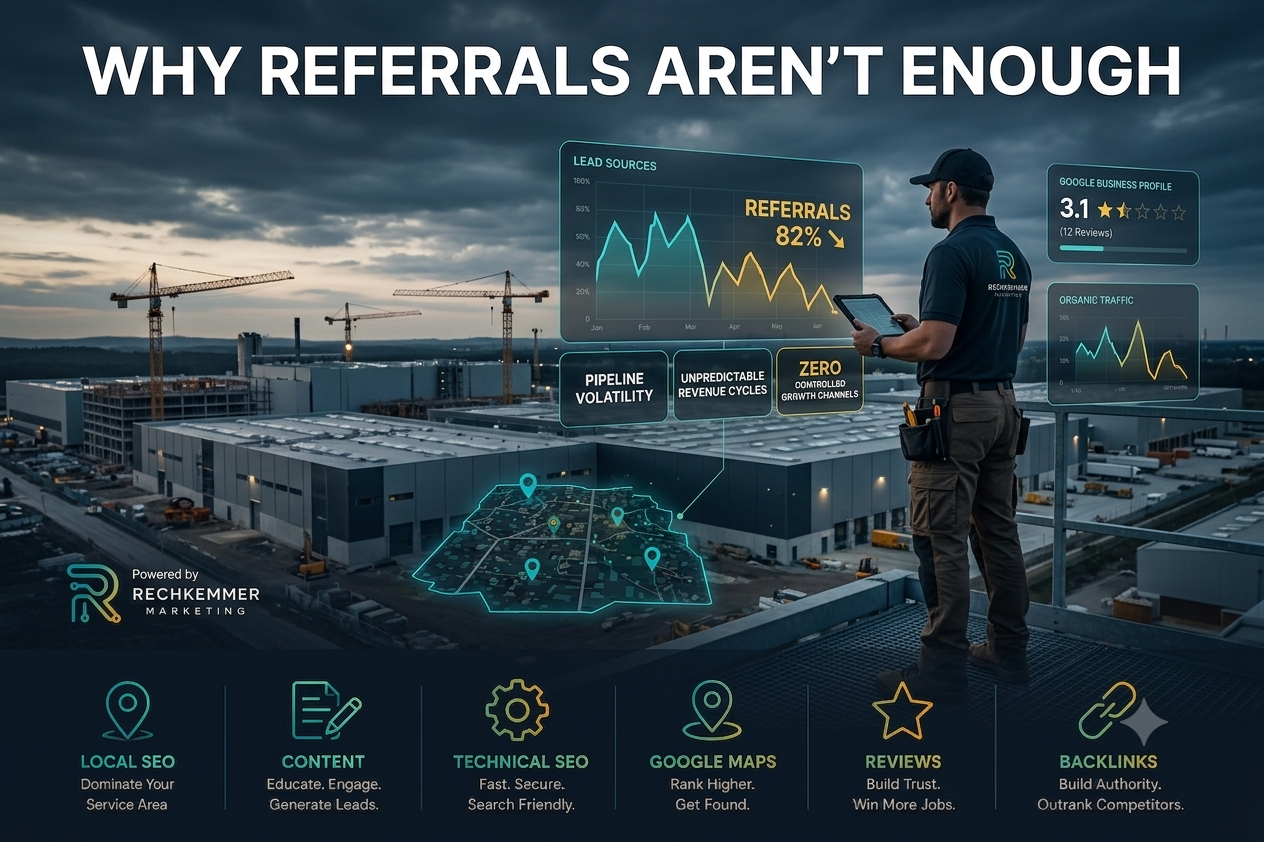
Referrals are often the backbone of many commercial contracting businesses. They feel reliable, high-trust, and cost-effective—but depending on them alone creates a fragile growth system that can stall without warning.
Why Referrals Feel Safe (But Aren’t Scalable)
Most contractors start with referrals because they work early on. A few strong relationships with property managers, developers, or general contractors can keep a business busy for years.
The problem is that referrals are not a controlled or scalable system. They depend on external factors like:
- Whether past clients are currently building new projects
- Whether relationships stay active over time
- Whether those contacts choose to recommend you at the right moment
When any of these shift, your pipeline can drop without any change in your actual service quality.
The Hidden Risk: Unpredictable Lead Flow
A referral-based business doesn’t fail suddenly—it fluctuates.
One month you may have too much work. The next, nothing in the pipeline.
This inconsistency creates challenges with:
- Hiring and workforce planning
- Equipment utilization
- Cash flow forecasting
- Long-term growth decisions
Even strong contractors with great reputations experience slowdowns when referrals temporarily dry up.
Why Referrals Limit Growth Potential
Referrals also cap your upside. You can only grow as fast as your network expands, which is often tied to geography and personal relationships.
That means:
- You miss out on markets where you’re not already known
- You rely on a limited set of relationships to generate revenue
- Growth becomes reactive instead of intentional
In competitive commercial markets, that ceiling becomes a real constraint over time.
Building a More Predictable Lead Generation System
Referrals should still be part of your strategy—but not the whole strategy.
Most growing contractors combine referrals with systems that create consistent visibility, such as:
- Search visibility through SEO and service area pages
- Direct outreach to property managers and facility directors
- Content that builds trust before the first conversation
- A clear online presence that captures inbound demand
These systems work while you’re on jobsites—not just when someone remembers to recommend you.
Final Takeaway
Referrals are valuable, but they are not predictable enough to support long-term growth on their own.
Contractors who build stable, scalable businesses treat referrals as one input—not the foundation—of their lead generation strategy.