
Your competitors may not be appearing in AI recommendations because they have a better product.
They may be appearing because they have a better evidence footprint.
Their brand is mentioned in more industry publications. Their profiles are more complete. Their product appears in more comparisons. Their customers discuss them in more communities. Their positioning is repeated across more third-party sources.
When an AI system is asked to recommend providers, compare alternatives, or identify the best option for a specific buyer, those external sources give it something to work with.
A company can be qualified, experienced, and well suited to the query—but still be overlooked when the wider web does not document those strengths clearly.
This is where citation-gap outreach becomes useful.
Citation-gap outreach is the process of identifying the sources that support your competitors but not your brand, then systematically closing the most important gaps.
The goal is not to replicate every competitor mention.
It is to build the external evidence AI systems and buyers need to understand why your brand belongs in the consideration set.
What Is Citation-Gap Outreach?
Citation-gap outreach is the process of finding external sources that mention, validate, compare, or recommend competitors while excluding your brand—and then developing a legitimate strategy to earn inclusion.
Those sources may include:
- Industry publications
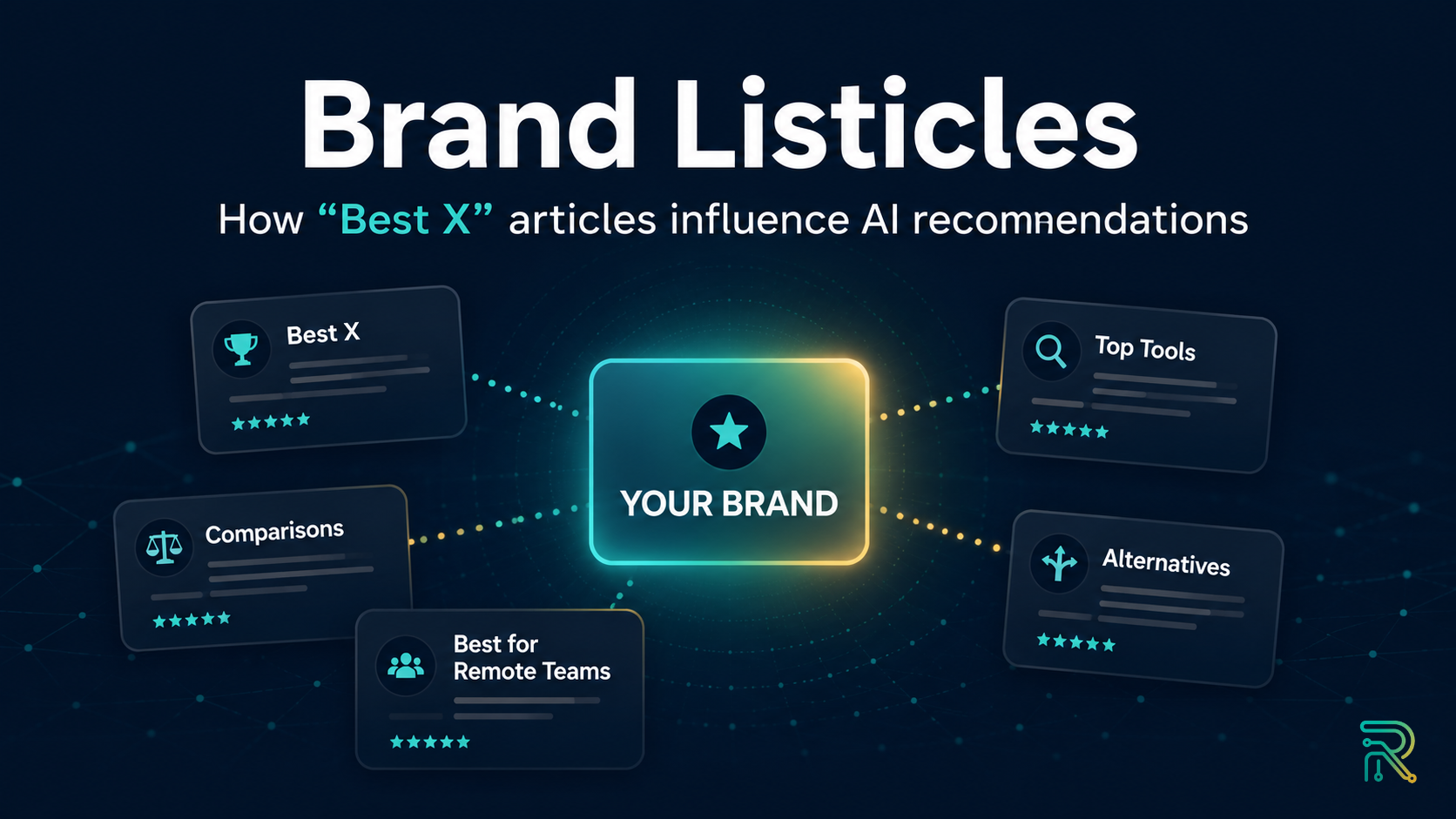
- “Best of” lists
- Buyer guides
- Comparison pages
- Review platforms
- Professional directories
- Association profiles
- Expert articles
- Forums and communities
- Research reports
- Marketplace listings
The strategy starts with a simple competitive question:
Where are competitors receiving external validation that our brand is not?
That is different from asking how to earn more links.
A backlink may strengthen traditional organic visibility. A citation source can also help establish what a brand does, who it serves, how it compares, and when it should be recommended.
Citation-gap outreach focuses on closing those informational and competitive gaps.
Citation Gaps vs. Traditional Link Gaps
Traditional SEO teams have used link-gap analysis for years.
The usual process is to identify websites linking to competitors but not to the brand. Those domains become potential outreach targets.
Citation-gap analysis expands the question.
Traditional link gap
Which websites link to competitors but not to us?
AI citation gap
Which sources help competitors get understood, compared, trusted, or recommended but do not currently support our brand?
The overlap can be significant, but the objectives are not identical.
A traditional link-gap opportunity may be valuable because it can transfer authority or generate referral traffic.
A citation-gap opportunity may be valuable because it contains information that reinforces:
- Category membership
- Audience fit
- Use-case relevance
- Product capabilities
- Geographic reach
- Competitive differentiation
- Customer experience
- Recommendation conditions
A source can close a meaningful citation gap even without a followed backlink.
For example, a software marketplace may list a competitor’s integrations, ideal customer size, industries served, and common use cases. Your company may already have a profile on the same platform, but it contains only a name and one-sentence description.
Technically, both brands have a listing.
Practically, only one has useful evidence.
Why Citation Gaps Matter in AI Search
AI systems need supporting information when generating answers.
When someone asks:
- What are the best platforms in this category?
- Which provider should a small company choose?
- What are the strongest alternatives to this product?
- Which company specializes in this industry?
- Who provides this service in my area?
- Which option is best for a specific use case?
The system must determine which brands are relevant and why.
That answer may require evidence about:
- Category relevance
- Target customer
- Use cases
- Features and services
- Reputation
- Differentiators
- Tradeoffs
- Market positioning
- Geographic availability
- Comparisons with alternatives
A competitor with more supporting sources has more opportunities to be retrieved, interpreted, and included.
This does not mean more mentions automatically produce more recommendations. AI systems use different retrieval methods, indexes, ranking signals, and answer-generation processes.
But the basic competitive disadvantage is straightforward:
When one brand has broad, consistent third-party support and another has little external documentation, the first brand gives the system a stronger evidence base.
Citation-gap outreach attempts to reduce that disadvantage.
The Main Types of Citation Gaps
Not every gap represents the same problem.
Separating citation gaps by type makes it easier to determine what evidence is missing and which tactic is most appropriate.
Category Citation Gaps
A category citation gap occurs when competitors are regularly included in sources that define or explain the market, while your brand is absent.
Examples include:
- “Top software platforms for manufacturers”
- “Leading cybersecurity consulting companies”
- “Best payroll providers for small businesses”
- Industry directories
- Association listings
- Marketplace category pages
- Educational articles naming common providers
These sources help establish which companies belong in the category.
When competitors appear repeatedly and your brand does not, they become part of the apparent market set while your company remains less visible.
Closing this gap may require:
- Relevant directory inclusion
- More accurate marketplace categorization
- Editorial outreach
- Expert contributions
- Industry partnerships
- Stronger category language in third-party profiles
Comparison Citation Gaps
A comparison citation gap exists when competitors appear in buying and evaluation content, but your brand is excluded.
Examples include:
- Brand A vs. Brand B pages
- Competitor-alternative articles
- Product comparison tables
- Buyer guides
- Review comparisons
- “Best option for…” content
- Software shortlists
These sources are especially important because they place brands within a consideration set.
They do not merely establish that a company exists. They explain how it compares.
A comparison gap may mean buyers and AI systems can find detailed information about competitors’ strengths, weaknesses, use cases, and tradeoffs, while similar information about your company is unavailable.
Use-Case Citation Gaps
A use-case gap appears when competitors are repeatedly associated with a specific problem, audience, or situation.
For example:
- Best CRM for consulting firms
- Best project-management software for construction
- Best SEO platform for agencies
- Best ERP system for midsized manufacturers
- Best accounting firm for technology startups
Your company may serve the same use case, but the external source network does not make that relationship clear.
This gap is often more important than a broad category gap.
A brand may already be recognized as a CRM platform but still be absent when the question becomes “Which CRM is best for a five-person professional-services firm?”
Closing the gap requires more than repeating the category.
The brand needs sources that connect it to the specific audience and buying condition.
Authority Citation Gaps
An authority gap occurs when competitors receive validation from respected organizations and experts that your brand lacks.
These sources may include:
- Industry publications
- Trade associations
- Analysts
- Professional organizations
- Researchers
- Subject-matter experts
- Conference speakers
- Partner ecosystems
- Certification bodies
The value is not simply the perceived authority of the domain.
It is the relevance and specificity of the validation.
A small trade publication explaining a company’s experience in a narrow industry may provide more useful context than a brief mention on a major general-interest website.
Conversational Citation Gaps
A conversational citation gap appears when competitors are regularly discussed in communities while your brand has little presence.
These conversations may occur on:
- Industry forums
- Professional communities
- Q&A platforms
- Slack or Discord communities with public archives
- Product-support forums
- Niche discussion boards
Community discussions can reveal information that formal content often misses:
- Why someone chose the product
- Which alternatives they evaluated
- What kind of customer it suits
- What limitations buyers should know
- How the product performs in practice
- Which situations make it a poor fit
A competitor with more legitimate discussion has more conversational evidence surrounding its brand.
That does not justify manufacturing fake conversations. It highlights the need to build a real presence in the communities where relevant buyers exchange information.
Profile and Data Gaps
A profile gap occurs when a brand is technically present on a third-party platform but its information is incomplete, outdated, or weaker than competitor profiles.
This can happen across:
- Software marketplaces
- Professional directories
- Review platforms
- Company databases
- Association profiles
- Partner directories
- Local business listings
Competitors may have:
- More accurate categories
- More complete service lists
- Better descriptions
- More detailed product information
- More current screenshots
- Stronger review coverage
- Better use-case context
- Verified company details
These gaps are often among the easiest to close because the source already exists.
The problem is not acquisition. It is completeness and accuracy.
How to Find Citation Gaps
Citation-gap analysis should begin with the questions buyers ask, not a list of competitor backlinks.
The following process connects external sources to commercial prompts.
Step 1: Identify High-Value Buyer Prompts
Start with questions where brand inclusion could influence consideration.
Examples include:
- Best [category]
- Best [category] for [audience]
- Best option for [use case]
- [competitor] alternatives
- Companies like [competitor]
- Who provides [service]?
- Best provider in [location]
- Which platform supports [capability]?
- What is the easiest option for [customer type]?
- Which company specializes in [industry]?
Do not evaluate every conceivable prompt equally.
Prioritize questions tied to:
- Commercial intent
- Core services
- High-value audiences
- Strategic use cases
- Competitive positioning
- Geographic markets
- Sales conversations
Step 2: Analyze the Sources Supporting the Answers
Review the sources that appear around each question.
Look for patterns:
- Which publications appear repeatedly?
- Which directories are visible?
- Which comparison pages influence the answer?
- Which community discussions are surfaced?
- Which companies are included?
- What language surrounds each brand?
- What reasons are given for recommending them?
- Which audiences and use cases are associated with them?
- What limitations or tradeoffs are mentioned?
Do not focus only on the final list of brands.
The surrounding source environment often explains why those brands appear.
Step 3: Compare Competitive Evidence Footprints
Create a structured map of your brand and its competitors.
|
Evidence type |
Competitor A |
Competitor B |
Your brand |
|
Industry publication mentions |
Strong |
Moderate |
Limited |
|
Comparison-page inclusion |
Strong |
Strong |
Missing |
|
Directory profile quality |
Complete |
Complete |
Incomplete |
|
Review depth |
Strong |
Moderate |
Weak |
|
Community discussion |
Frequent |
Limited |
Minimal |
|
Use-case association |
Clear |
Clear |
Unclear |
|
Expert commentary |
Frequent |
Moderate |
Missing |
|
Original research |
Some |
None |
None |
The goal is not to reduce the strategy to checkmarks.
The table helps reveal where the evidence imbalance is concentrated.
A brand may have a large number of directory listings but still lack comparison coverage. Another may have strong review visibility but weak industry authority. Each gap requires a different response.
Step 4: Evaluate the Context, Not Just the Mention
A competitor appearing on a page does not automatically mean the source is valuable.
Ask:
- Is the source relevant to an important buyer prompt?
- Is the competitor mentioned prominently?
- Does the source explain why the competitor is a fit?
- Is the information current?
- Does the page compare meaningful differences?
- Is the source likely to influence buyer research?
- Is the content publicly accessible and retrievable?
- Is the brand described accurately?
A passing mention and a detailed recommendation are not equivalent.
Step 5: Record the Missing Relationship
For every valuable gap, identify exactly what relationship your brand lacks.
Examples:
- Brand → Category
- Brand → Small business
- Brand → Manufacturing
- Brand → Specific service
- Brand → Geographic market
- Brand → Competitor alternative
- Brand → Product capability
- Brand → Customer outcome
- Brand → Industry specialization
This turns a vague outreach target into a specific evidence objective.
How to Prioritize Citation Opportunities
Not every source that mentions a competitor deserves outreach.
Prioritize opportunities based on four main criteria.
1. Prompt Relevance
Does the source appear around a buyer question that matters?
A page influencing a high-value commercial query should usually receive greater priority than a generic article with little relationship to the buying process.
2. Source Quality
Is the source:
- Topically relevant?
- Factually responsible?
- Publicly accessible?
- Maintained?
- Trusted within the market?
- Useful to real buyers?
- Structured clearly enough to retrieve and interpret?
A high domain metric cannot compensate for irrelevant or low-quality content.
3. Competitive Importance
Does the source meaningfully shape the consideration set?
A comparison page repeatedly surfacing for competitor-alternative queries may be more strategically important than an isolated publication mention.
4. Context Quality
Would inclusion provide useful information about the brand?
The strongest opportunities allow the source to explain:
- What the brand does
- Who it serves
- Why it differs
- When it should be considered
- How it compares
- What limitations buyers should understand
A niche comparison page with detailed buyer context may be more valuable than a high-authority page listing dozens of companies with no explanation.
A Simple Citation-Gap Prioritization Model
Score each opportunity from one to five across:
- Buyer-prompt relevance
- Source relevance
- Context quality
- Competitive influence
- Likelihood of legitimate inclusion
- Accuracy and update potential
The result does not need to become a rigid formula.
Its purpose is to prevent the team from chasing every available placement with equal intensity.
Outreach Strategies for Closing Citation Gaps
Different gaps require different tactics.
There is no single citation-gap email that works across every source type.
Editorial Outreach
Editorial outreach is appropriate for:
- Industry roundups
- Buyer guides
- Expert articles
- Research summaries
- Market analyses
- Trade publications
- Curated resource pages
A weak pitch asks the publisher to add the company because it was omitted.
A stronger pitch explains:
- Why the brand belongs in the article
- Which audience or use case it serves
- What makes it meaningfully different
- What evidence supports the inclusion
- How the update would improve the resource for readers
For example:
Your guide covers several enterprise-focused platforms, but it does not include an option designed specifically for smaller manufacturers. Our platform serves that segment and supports [relevant capabilities]. I can provide current product information, screenshots, customer examples, and a concise explanation of where it fits relative to the existing options.
The pitch should improve the source, not merely benefit the brand.
Comparison and Alternative Content
Some comparison gaps should be addressed on the brand’s own website.
Useful assets may include:
- Brand-vs.-competitor pages
- Alternative pages
- Product-selection guides
- Buyer checklists
- Feature comparisons
- Use-case guides
- Decision frameworks
Owned comparison content does not replace third-party validation, but it establishes a clear factual foundation.
The most credible comparison pages:
- Explain differences honestly
- Identify who each option suits
- Address tradeoffs
- Avoid false claims
- Acknowledge where competitors may be stronger
- Help the buyer make a decision
A comparison page that declares the brand superior in every category is unlikely to build trust.
Profile Optimization
Profile optimization is often the fastest way to close existing gaps.
Audit profiles across:
- Relevant directories
- Association sites
- Marketplaces
- Review platforms
- Partner ecosystems
- Company databases
- Local listings
Improve:
- Categories
- Company descriptions
- Service lists
- Target audiences
- Locations
- Screenshots
- Capabilities
- Integrations
- Leadership details
- Pricing information
- Review responses
- Use-case language
The goal is not identical wording everywhere.
The facts and core relationships should remain consistent.
Community Participation
Community visibility should be earned through useful participation.
Legitimate tactics include:
- Answering relevant questions
- Sharing experience
- Explaining tradeoffs
- Providing resources
- Correcting misinformation respectfully
- Supporting customers
- Participating in category discussions
- Helping buyers evaluate options
Avoid:
- Fake accounts
- Manufactured recommendations
- Coordinated praise
- Disguised promotion
- Posting brand mentions without adding value
- Pretending to be an independent customer
Community evidence is valuable partly because it reflects authentic discussion. Manipulating that environment can damage trust and create platform risk.
Digital PR and Original Research
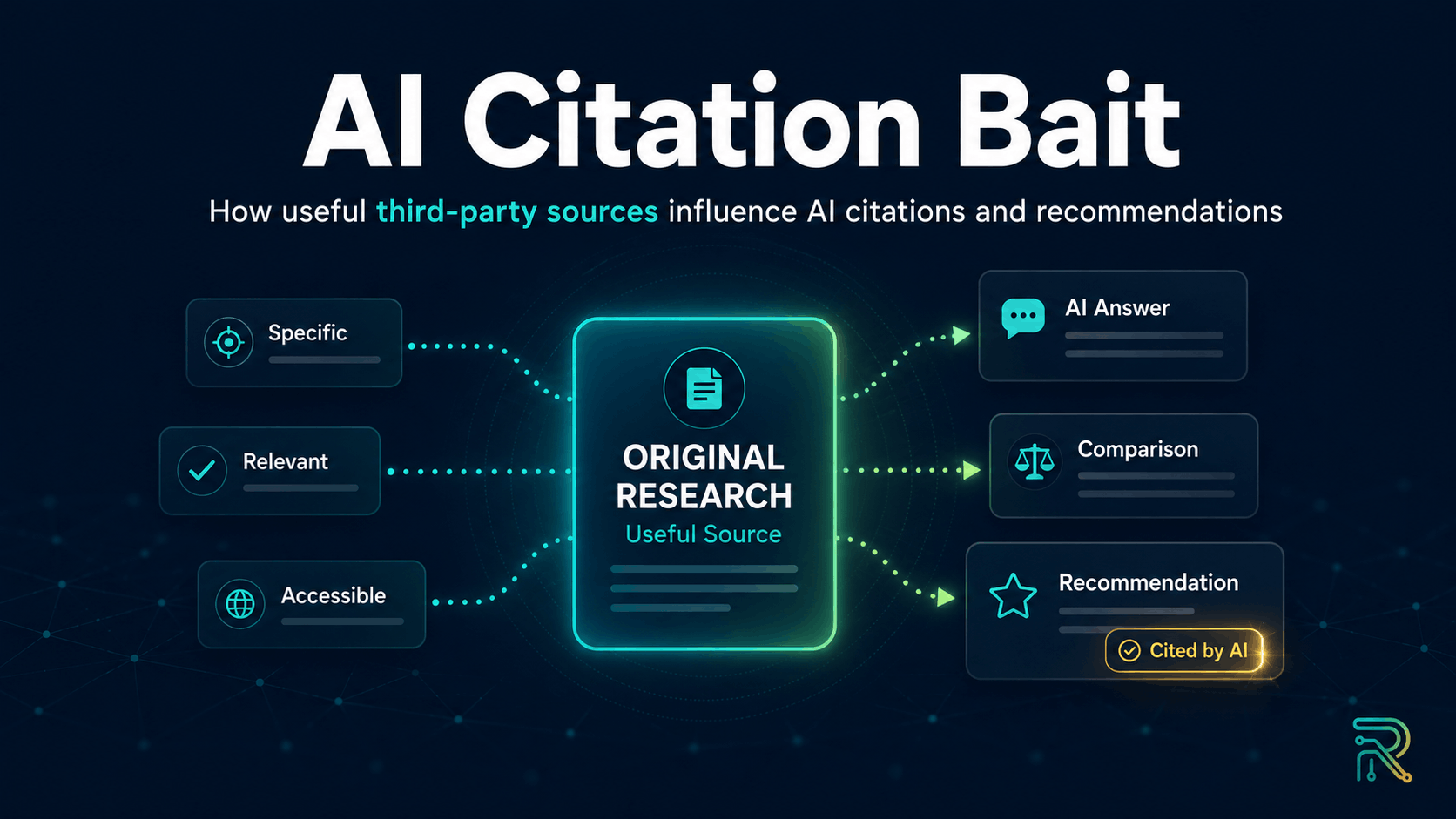
Some of the strongest citation opportunities come from creating assets that publishers want to reference.
Examples include:
- Industry benchmark reports
- Surveys
- Proprietary datasets
- Market research
- Original experiments
- Trend analyses
- Expert commentary
- Data visualizations
- Technical studies
This changes the outreach proposition.
Instead of asking for inclusion based solely on the company’s existence, the brand offers new information that improves the publisher’s work.
Original research can also create a broader citation network as multiple sources reference the same dataset or finding.
Partnerships, Associations, and Expert Contributions
Some gaps can be closed through stronger participation in the industry itself.
Potential opportunities include:
- Association membership
- Partner directories
- Certification programs
- Conference contributions
- Webinar participation
- Expert interviews
- Guest analysis
- Joint research
- Podcast appearances
- Advisory groups
These activities create external documentation of expertise, relationships, and category relevance.
Why Context Determines Citation Value
Simply adding the company to a list does not always close the real gap.
Consider two descriptions.
Weak context
Company X is one of several available platforms.
Stronger context
Company X is designed for growing professional-services firms that need project management, time tracking, and invoicing in one system without the complexity of enterprise software.
The stronger version provides:
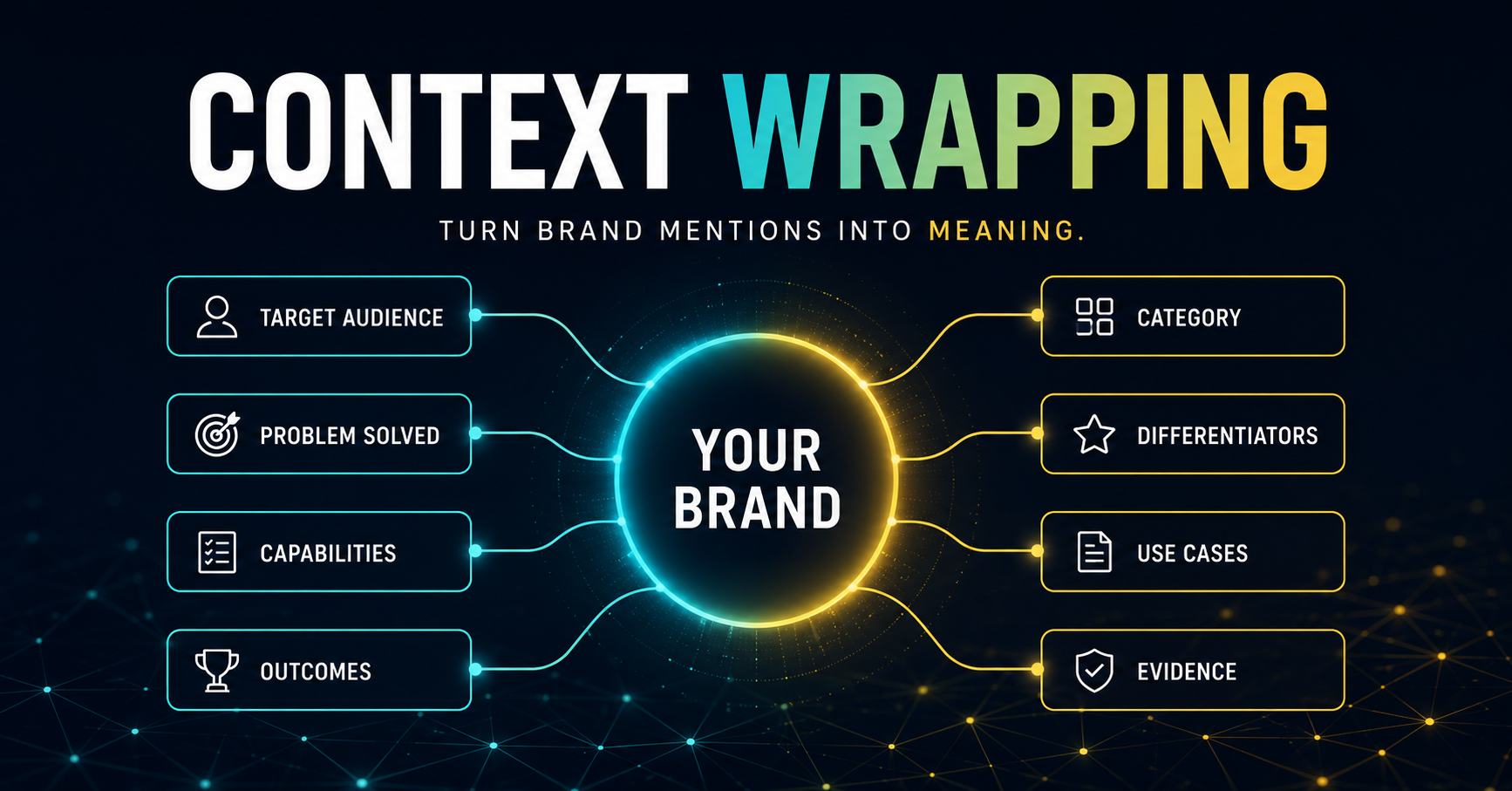
- Category
- Audience
- Capabilities
- Differentiation
- Buyer condition
- Implied tradeoff
The name mention creates awareness.
The context creates recommendation value.
When pursuing inclusion, ask whether the source can communicate:
- What the company does
- Who it serves
- What it is known for
- Why it differs
- When it is a strong fit
- Where it may not be the best fit
- How it compares with alternatives
The objective is not maximum praise.
It is accurate, useful positioning.
Citation-Gap Outreach and Entity Engineering
Citation-gap outreach becomes more strategic when connected to entity engineering.
Entity engineering involves strengthening the relationships between a brand and the concepts it wants to be associated with.
Examples include:
- Brand → Category
- Brand → Product
- Brand → Services
- Brand → Audience
- Brand → Use case
- Brand → Industry
- Brand → Location
- Brand → Competitor
- Brand → Differentiator
- Brand → Expertise
Your website can define these relationships directly.
External sources help corroborate them.
For example, a company may consistently describe itself as a B2B SEO agency for software brands. That owned claim becomes stronger when third-party profiles, interviews, case studies, publications, and client discussions reinforce the same relationship.
The external wording does not need to match exactly.
The underlying meaning should align.
This creates a more coherent knowledge footprint across the web.
Building a Citation-Gap Outreach Campaign
A practical campaign can follow nine steps.
1. Define the commercial prompt set
Identify the recommendation, comparison, category, use-case, and location prompts that matter most.
2. Document the current answer landscape
Record:
- Brands included
- Sources used
- Recommendation reasoning
- Common categories
- Audience descriptions
- Mentioned strengths
- Stated limitations
3. Map competitor evidence
For each competitor, record the sources supporting its inclusion.
4. Classify the gaps
Separate:
- Category gaps
- Comparison gaps
- Use-case gaps
- Authority gaps
- Conversational gaps
- Profile gaps
5. Prioritize opportunities
Score each gap based on relevance, quality, context, influence, and feasibility.
6. Choose the correct tactic
The next action may be:
- Editorial outreach
- Profile improvement
- Comparison-content creation
- Digital PR
- Research development
- Community participation
- Partnership development
- Fact correction
7. Create a source-specific value proposition
Explain why adding or updating the brand improves that particular resource.
Avoid sending the same generic pitch to every publisher.
8. Reinforce consistent positioning
Provide accurate descriptions of the brand’s category, audience, services, use cases, differentiators, and limitations.
9. Monitor the resulting evidence footprint
Track whether:
- The source was updated
- The brand was included
- The context is accurate
- The page becomes visible for target prompts
- AI descriptions change
- New citation opportunities emerge
How to Measure Citation-Gap Progress
Citation-gap outreach should not be measured only by links acquired.
Useful metrics include:
Gaps closed
How many high-priority sources now include accurate information about the brand?
Third-party reference growth
Is the number of relevant external mentions increasing?
Source diversity
Is the brand supported across multiple source types, or is visibility dependent on one directory or publication?
Comparison inclusion
Does the brand appear more often in relevant alternatives, buyer guides, and category shortlists?
Use-case association
Is the brand increasingly connected to the target audiences and problems it serves?
Description accuracy
Do third-party and AI-generated descriptions reflect the company accurately?
Recommendation visibility
Does the brand appear more frequently in relevant AI-generated answers?
Competitor evidence advantage
Are the largest differences between the brand’s source footprint and competitor footprints shrinking?
Narrative consistency
Do multiple sources reinforce compatible relationships between the brand, category, audience, capabilities, and differentiators?
Measurement should account for volatility.
One AI answer is not sufficient proof of a lasting change. Evaluate patterns across multiple prompts, repeated tests, and longer time periods.
Common Citation-Gap Outreach Mistakes
Treating Every Mention as Equally Valuable
A mention on an irrelevant page may contribute little to buyer understanding.
Evaluate the source, context, and prompt relationship.
Chasing Irrelevant Authority
A major publication is not automatically better than a focused niche source.
Relevance and specificity often determine whether the citation provides useful evidence.
Focusing Only on Backlinks
A placement can be valuable even when the link is nofollowed or absent.
The information surrounding the brand may still influence how it is understood.
Creating Artificial Recommendations
Fake reviews, fabricated discussions, paid endorsements presented as independent opinions, and undisclosed promotions undermine the credibility the strategy is supposed to build.
Earn inclusion legitimately.
Ignoring Mention Context
Being added to a list is not always enough.
A weak or inaccurate description may fail to establish the relationships the brand needs.
Copying Competitors Without Improving the Positioning
The goal is not to recreate a competitor’s exact footprint.
A competitor may be represented poorly, or the source may not align with your strongest buyer segment.
Use the gap as research, then build more precise evidence.
Ignoring Buyer Prompts
A source can be relevant to the industry but unrelated to the questions that influence purchasing decisions.
Begin with prompts, not domains.
Expecting Immediate Results
Closing one gap does not guarantee that AI systems will begin recommending the brand.
Citation visibility develops through a wider network of accurate, useful, and consistent sources.
AI Visibility Is a Competitive Evidence Game
Brands no longer compete only for search rankings.
They also compete for:
- Mentions
- Citations
- Comparisons
- Reviews
- Conversations
- Category inclusion
- Supporting evidence
A strong product without a strong external evidence footprint can remain difficult to discover and recommend.
Citation-gap outreach reveals where that evidence imbalance exists.
It shows which sources validate competitors, which relationships those sources reinforce, and which parts of your own brand story remain unsupported outside your website.
The goal is not to manufacture a reputation.
It is to make the brand’s legitimate strengths easier to verify.
The most useful question is no longer only:
Where do we rank?
It is also:
Where are competitors being validated that we are not?
Frequently Asked Questions About Citation-Gap Outreach
What is citation-gap outreach?
Citation-gap outreach is the process of identifying third-party sources that mention, compare, validate, or recommend competitors while excluding your brand.
The goal is to determine where competitors have stronger external evidence and develop legitimate strategies to earn inclusion, improve existing profiles, contribute useful information, or create new sources worth citing.
It focuses on closing informational gaps rather than simply accumulating more backlinks.
What is an AI citation gap?
An AI citation gap exists when competitors appear across sources that may influence AI-generated answers while your brand is missing, weakly represented, or inaccurately described.
These gaps may occur in:
- Industry publications
- Comparison articles
- Directories
- Review platforms
- Forums
- Buyer guides
- Expert resources
- Company databases
A citation gap does not necessarily mean the competitor has a better product. It means the competitor has more external evidence available to support its inclusion.
How is citation-gap analysis different from backlink-gap analysis?
Backlink-gap analysis asks:
Which websites link to competitors but not to us?
Citation-gap analysis asks:
Which sources help competitors get understood, compared, trusted, or recommended but do not support our brand?
A valuable citation source may include a followed backlink, a nofollowed link, or no link at all. Its value comes from the information and context it provides about the brand.
Why do citation gaps matter for AI search?
AI systems often rely on external sources when producing comparisons, recommendations, summaries, and category lists.
Those sources may help establish:
- What category a brand belongs to
- Who it serves
- Which use cases it supports
- How it differs from alternatives
- What customers think about it
- When it may be a strong fit
Competitors with broader and more consistent evidence footprints may have more opportunities to be retrieved and included in answers.
Closing citation gaps does not guarantee recommendations, but it improves the amount and quality of evidence available about the brand.
How do you find competitor citation gaps?
Start with commercially relevant prompts, such as:
- Best [category]
- Best [category] for [audience]
- [competitor] alternatives
- Companies like [competitor]
- Best provider for [use case]
- Who offers [service] in [location]?
Then examine:
- Which brands appear
- Which sources support them
- What recommendation reasons are provided
- Which audiences and use cases are associated with them
- Which source types repeatedly exclude your brand
Compare those findings against your own third-party source footprint.
What types of citation gaps should a brand look for?
The most common types include:
Category gaps
Competitors appear in sources that define the category, while your brand is absent.
Comparison gaps
Competitors appear in alternatives articles, buyer guides, and comparison pages.
Use-case gaps
Competitors are associated with specific audiences, industries, or problems that your brand also serves.
Authority gaps
Competitors receive validation from publications, experts, associations, analysts, or partners.
Conversational gaps
Competitors are discussed and recommended in communities, forums, and Q&A platforms.
Profile gaps
Competitor profiles are more complete, current, or informative across directories, marketplaces, and review platforms.
Are all competitor citations worth pursuing?
No.
A citation should be evaluated based on:
- Relevance to important buyer prompts
- Topical and editorial quality
- Context surrounding the brand
- Influence on comparisons
- Public accessibility
- Accuracy
- Likelihood of legitimate inclusion
A highly relevant industry comparison page may be more valuable than a general publication with greater authority but little connection to the buyer’s decision.
What makes a competitor citation valuable?
A valuable citation does more than mention a company name.
It helps explain:
- What the company does
- Who it serves
- Which problems it solves
- Why it is different
- When it should be considered
- How it compares with alternatives
- What limitations buyers should understand
The surrounding context determines whether the source provides meaningful recommendation evidence.
Can a citation be useful without a backlink?
Yes.
A review, directory profile, comparison entry, expert quote, or forum discussion can provide useful information even when it does not include a followed backlink.
The source may still reinforce the brand’s category, audience, expertise, capabilities, reputation, or competitive positioning.
Backlinks and citations can overlap, but they should not be evaluated as the same asset.
What outreach methods can close citation gaps?
The appropriate strategy depends on the type of source.
Common methods include:
- Pitching inclusion in buyer guides or industry roundups
- Providing updated product or company information
- Improving directory and marketplace profiles
- Contributing expert commentary
- Creating comparison and alternative content
- Publishing original research
- Participating legitimately in industry communities
- Joining relevant associations or partner programs
- Correcting inaccurate third-party information
- Supplying publishers with useful data, examples, or resources
The outreach should explain how the update benefits the source’s readers, not only the brand.
Should brands create their own comparison pages?
Yes, when those pages help buyers make an informed decision.
Strong comparison content should:
- Explain meaningful differences
- Identify who each option suits
- Discuss tradeoffs honestly
- Avoid false claims
- Acknowledge where competitors may be stronger
- Connect capabilities to buyer needs
Owned comparison pages establish the brand’s position, but they do not replace independent third-party validation.
Is community participation part of citation-gap outreach?
It can be.
Forums and communities often contain detailed discussion about use cases, alternatives, customer fit, strengths, and limitations.
Brands can build legitimate visibility by:
- Answering questions
- Sharing expertise
- Explaining tradeoffs
- Providing helpful resources
- Supporting customers
- Correcting inaccuracies transparently
Fake accounts, disguised promotion, manufactured recommendations, and coordinated praise should be avoided.
How does citation-gap outreach relate to entity engineering?
Citation-gap outreach can reinforce the relationships a brand wants external sources to understand.
Examples include:
- Brand → Category
- Brand → Service
- Brand → Audience
- Brand → Use case
- Brand → Location
- Brand → Differentiator
- Brand → Competitor
- Brand → Expertise
When multiple independent sources reinforce compatible relationships, the brand develops a clearer external knowledge footprint.
How should citation-gap outreach be measured?
Useful metrics include:
- Number of priority citation gaps closed
- Growth in relevant third-party mentions
- Increase in source diversity
- Improved comparison-page inclusion
- Stronger association with target audiences and use cases
- More accurate third-party descriptions
- Reduced competitor evidence advantages
- Increased inclusion in relevant AI-generated answers
- Improved consistency in how AI systems describe the brand
Results should be evaluated across multiple prompts and time periods rather than from one isolated AI answer.
How long does it take to close citation gaps?
The timeline varies by source type.
Profile updates may be completed quickly. Editorial placements, research coverage, community visibility, and high-quality third-party comparisons may take substantially longer.
The objective is to build a distributed and credible evidence footprint over time—not secure one placement and expect an immediate transformation in AI visibility.
Does citation-gap outreach guarantee AI recommendations?
No.
AI systems use different retrieval methods, indexes, ranking processes, and answer-generation models. Their outputs can also change between prompts and over time.
Citation-gap outreach improves the evidence available about a brand, but it cannot guarantee inclusion, citation, ranking, or recommendation.
The FAQs and metadata align with the article’s focus on closing the competitive evidence gaps that influence how brands are understood and compared.